Interviews with older generations and history books reveal that beans, lentils and favas were already being grown around San Quirino, a small town near Pordenone, as far back as the start of the 1800s. The economic value of San Quirino beans back then was surprisingly significant, and at the Pordenone market they would command higher prices than oats or corn.
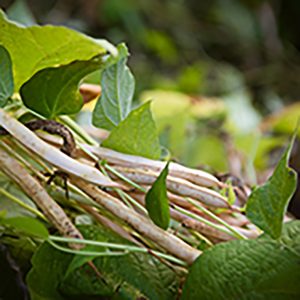
The Saint Quirino bean belongs to the the species Phaseolus vulgaris
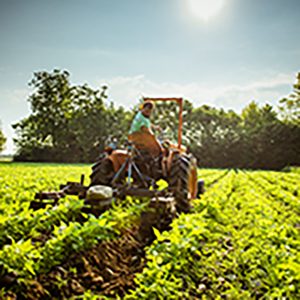
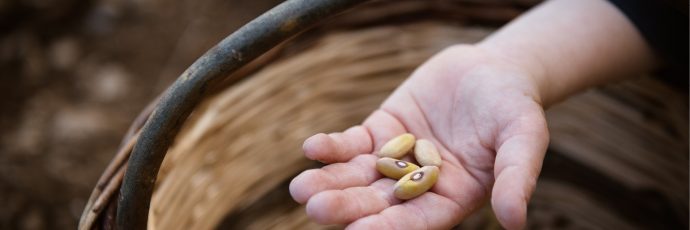
The typical variety has an elongated shape, a pale-brown color and a white eye with a dark brown iris. The beans were traditionally harvested manually, by pulling up the dwarf plants, planted in rows, and leaving them to dry before beating them with wooden sticks to extract the seeds from their pods. The beans would be left to dry in the sun for a few days and then stored in jute sacks.
After cooking, the bean’s skin becomes very thin and almost undetectable while the flesh remains compact and smooth, characteristics that make it unique. The beans are excellent in soups like pasta e fagioli alla friulana or the typical fasoi e frumenton, which is prepared by soaking beans and wheat then cooking them for around two hours with chopped lardo, parsley, oil, potatoes, salt and pepper.
Season
Available dried year-round.
Back to the archive >Production area:
San Quirino municipality and surroundings, Pordenone province
Presidium supported by:
Municipality of San Quirino, Bcc Pordenonese
Arnese e Rossi Mel
di Donato Arnese
Via Cesare Battisti, 43 B
San Quirino (Pn)
Tel.+39 349 6103158
info@fagioloanticodisanquirino.it
www.fagioloanticodisanquirino.it
Soc. Agr. SQS Srl
di Monica Romanin
Via Beato Odorico, 7
Pordenone
Tel. +39 333 6573813
biortodelsole@libero.it
Presidium Conferees
Cristian Rossi Mel
Via Monte Grappa, 6
San Quirino (Pn)
Tel. +39 340 7772462
cristian.rossimel@gmail.com
Emiliano Buffo
Tel. +39 339 2152188
ebuff@libero.it
Presidium Producers’ Coordinator
Donato Arnese
Tel. +39 349 6103158
info@fagioloanticodisanquirino.it