


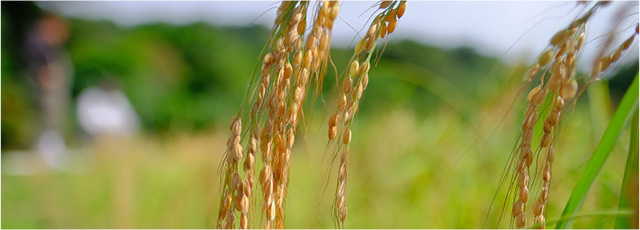
Haneji Akaho is an ancient variety of Japanese rice, grown on the island of Okinawa in the Nakandakari district. It is a product that is symbolic of the local culture and traditions. It is characterised by its high level of tannins, which gives the rice grain a reddish colour. The practice of its cultivation has been handed down from generation to generation since the time of the Ryukyu reign.
The Nakandakari area was rich in natural springs that flowed from the limestone plateau of the Ryukyu; local populations exploited this resource by building structures to collect water, Higawa (Hijya) and this favoured the development of rice cultivation. According to local legend, the place of origin of rice growing in Okinawa is linked to the Ukinju Hianiu area, in Nakandakari, which has always been an important place of worship. Here the Ovada Gogan ceremony took place, a propitiatory ceremony that was performed on the first day of the New Year celebrations of the lunar calendar.
After the Great World Depression and the rice riots in the early Showa period (between 1926 and 1945), some improved varieties were imported from Taiwan, which was a Japanese colony at the time.
In Okinawa, Taiwanese improved rice had a higher yield than native rice, so it was spread across the island. After the war, the number of rice growers in Okinawa prefecture decreased dramatically due to the great drought and the fact that many farmers began cultivating sugar cane.
Currently, rice is cultivated in only a few areas and there are very few farmers left growing native varieties. The Nakandakari district is working to promote the revival of local varieties and to revive and pass on the historical culture that is linked to its production.
Back to the archive >

