


Teltower Rübchen
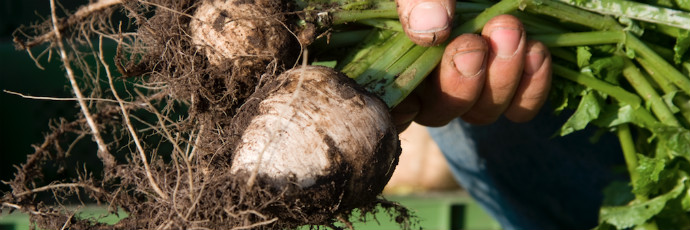
The Teltow turnip is a very small variety, which grows in clayey, sandy soil low in nutrition. The geological formation of the soil called “the Teltow“ dominates the characteristic features of the turnip. It is sown in August and harvested from October until the following spring. The Teltow turnip presents a slender, coned form with a main long pointy root and fine side roots mainly in two flat longitudinal striations. Further cross-striation on the turnip are elevated and sometimes rubbery. Its color is grey to brownish-white, but never evolves into yellow.The average size of the turnip is about 6cm long with a diameter of about 2 to 3cm. This low-calorie turnip can be distinguished from other turnips by its special appearance but also through the much higher sucrose content and lower water as well as glucosinolates content. The taste is aromatic, zesty with a slight spiciness, which makes it taste similar to radish. The farmers of the agriculture-based town Teltow cultivated the turnip since the early 18th century. In the past it was a staple food, as the potato had not been introduced yet. 9th century was the high time for the Teltow turnips and it was also sold on the markets in Berlin. Recipes can be found in many antique cookbooks. Johann Wolfgang Goethe, Theodor Fontane and Immanuel Kant also praised its extraordinary taste . As the cultivation and harvest needed to be done by hand, the turnip almost disappeared through the industrialisation of agriculture over the time. During the period of the GDR it was cultivated in some private gardens and by hobby gardeners. Nowadays it can be found only at some regional markets.
Image: © Stefan Abtmeyer
Back to the archive >
