


The cultivation of onions on the island of Hokkaido is fairly recent, with the first attempts to grow them being in the Sapporo public gardens in 1871. On the other hand, land in Hokkaido began to be dug up for agricultural use in the second half of the 19th century. Only in 1878, with the introduction of the variety “Yellow Globe Danvers”, did significant quantities of onions start to be produced, thanks to the influence of William Penn Brooks, who had joined the Sapporo Agricultural University a year earlier as replacement for Professor Clark. Born in Massachusetts, William Penn Brooks brought to Sapporo the original variety of onion from his native country, the “Yellow Globe Danvers”. Sapporo University carried out the first experimental field studies with this variety and the encouraging results prompted it to be promoted among small farmers of the area, with the support of the “Commission for the exploitation of the new lands of Hokkaido” of the Meiji government (Emperor Mutsuhito called his reign Meiji or “enlightened reign”). By 1884 production of seed couldn’t cover the demand from farmers, so other seeds of the same variety were imported from America (it was a temporary solution which was not followed up due to the difficulties in conducting trade with the island), but once the Yellow Globe Danvers managed to become acclimatized to the local conditions, production of onions on Hokkaido no longer involved the introduction of other seeds. The swift and unstoppable advance of onions in Hokkaido started in 1897 in the area of Iwamizawa, and concluded before the end of the Meiji Period (1912). The name Sapporokii (“yellow onion from Sapporo”) appears for the first time in a report from the Hokkaido Institute of Agricultural Research, published in 1905. The cultivation of onions, limited to the area of Sapporo, starts with sowing seed in a greenhouse at the beginning of March—when it still snows—and ends with harvesting in September. Seedlings begin to be transplanted to fields in May, while in mid-August roots are cut to prepare for the start of harvesting in the first days of September. The onions will keep for one year and a half and they are sold until February of the year after. Seeds are produced by the farmers, who in May transplant the mother bulb selected from the previous year’s crop, and harvest seed in September with development of the negibouzu (the plant stem). Supporting this activity, the Center for the Promotion of Agriculture run by the Municipality of Sapporo keeps the Sapporokii germplasm. Production of all varieties of onion has dropped dramatically in Sapporo, falling from above 72,000 tonnes in 1972 to 20,000 in 2004. The reasons for its fall from favor include its vulnerability to disease and its irregular shape. At present the ‘Project for the Revival of Sapporokii’ is running a promotional campaign in Sapporo to publicize its history, characteristics and uses in cooking. In particular it is hoped to reintroduce it into areas intended for growing onions (mainly districts in Higashi-ku, in east Sapporo). To promote the product, alliances are also being formed with the Consumers Association of Sapporo, the Union of Nutritionists for School Canteens, the Congress for the Improvement of Dietary Habits, etc. Traditionally it is eaten cut into thin slices in nimono (vegetable soup). In the area of Okatama, farming families have for a long time passed on their recipes for making tsukemono (pickled onions with soy sauce). Sapporokii are mainly produced in the city of Sapporo. In the rest of the island of Hokkaido (cities of Iwamizawa and Kitami etc) varieties derived from Sapporokii are grown.
Back to the archive >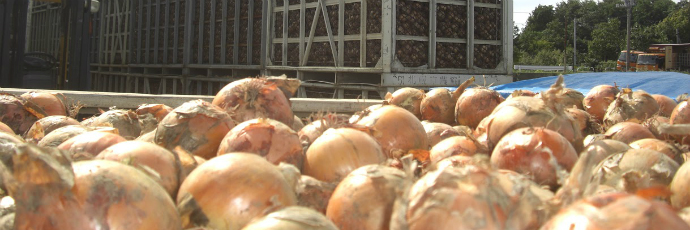
 Students of the Gastronomic Sciences at Pollenzo are collaborating with Slow Food to fill the Ark.
