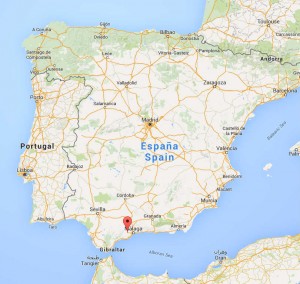
The sweet Grano de Oro orange is medium sized and very round in shape with a smooth, dark orange peel slightly thinner than most other oranges. The pulp has a very light colour, almost yellowish, with many seeds and large segments that are thinner than the ones found in other varieties.It is an orange that produces a lot of juice. It has a unique flavour, a very sweet, slightly floral taste with low acidity. It is harvested from December to April and one tree yields about 100 kilograms of fruit. A recent study of the sensory characteristics of oranges concluded that Grano de Oro oranges’ qualities derive from the unique characteristics of the land or terrior. These oranges are cultivated in and indigenous to southern Spain, and specifically Valle del Guadalhorce in southern Spain where they are commonly found mixed in with other varieties of citrus and other fruits. Both the ‘sweet’ and ‘bitter’ orange varieties come from southeast China and the Malay Archipelago. They were cultivated in southern China for thousands of years, before spreading throughout southeastern Asia, diffusing throughout the land via the Silk Road. Arabs brought some varieties of oranges to Spain in the 10th century; however, the orange was not cultivated until between the 15th and 16th centuries. Over the centuries, many varieties began to adapt to the local climate conditions and the individual preferences of the distinct towns as in the case of the ‘sweet orange’ in the Valle del Gudalhorce region. This fruit is much valued in this area for years due to its low acidity and its healing qualities, and it is considered especially healthy for children and the sick. The sweet Grano de Oro, due to its low commercial importance, is available only for personal consumption. There is no processing currently being done after harvest. It is unlikely that there are any citrus orchards that exclusively produce this variety, as many have been converted to orchards that produce more modern varieties. There is a group of farmers in Spain that still have some very productive samples of this variety on their farms.
Back to the archive > Students of the Gastronomic Sciences at Pollenzo are collaborating with Slow Food to fill the Ark.