


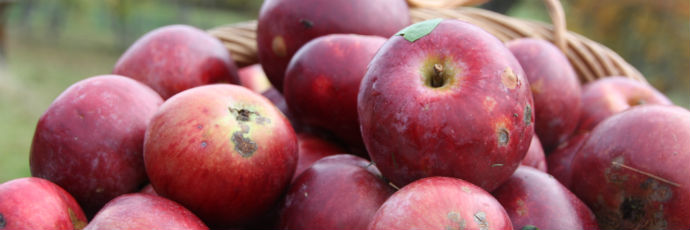
Bittenfelder Apfel
The origin of the Bittenfelder apple dates back to the 1930s. The fruit was discovered in the town located in southwest Germany, in the capital of the Rems-Murr district, Waiblingen. The apple is what is called a chance seedling, occurring in the suburbs of Waiblingen, Bittenfeld, which gave its name to the new variety.
This small town is situated in the northernmost quarter of Waiblingen and is inhabited by 4,300 citizens. Today, the Bittenfelder apple can still be found in the region. The variety is characterized by its robustness and it is high resistance to disease and frost. It requires well-drained soil and can grow only in warm locations; otherwise, the fruit matures too late and doesn’t have the chance to get sweet. The apple is medium to small, with a flattened- round shape. Its color is light green and turns lemon-yellow as it matures. The apples are picked from mid October to mid November and can be stored until March.
The Bittenfelder apple can be eaten raw or cooked in pies and cakes. These juicy fruits, due to a high sugar and high acid content are one of the best varieties for fermented and unfermented fruit juices (Süßmost). Yet it is registered on the Red List of endangered foods of the German Federal Office for Agriculture and Food (Bundesanstalt für Landwirtschaft und Ernährung).
Image: © Andreas Schaefer
Back to the archive >
