


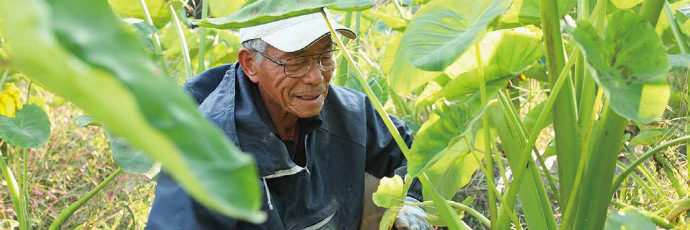
Jingoemon-Imo
Taro is an integral part of Japanese cuisine. Growing this tuber is relatively simple and due to the ease of cultivation and popularity there were well over 200 local varieties in Japan. In recent years this diversity has drastically declined. The main variety, Ishikawa-Wase, has engulfed over 80% of production meaning that many heirloom breeds now risk extinction. Jingoemon-Imo, native to Mamurogawa-machi in Yamagata Prefecture, is one of these endangered types of taro. Jingoemon-imo is noted for its delicate skin and texture. Whereas many other varieties tend to be rather cloying, it is smooth and fluffy – likened to a freshly pounded mochi rice cake. There are many traditional ways of preparing the vegetable, which can be easily adapted to modern kitchens. It can be boiled, mashed and mixed with rice to make mochi. These rice cakes can be transformed into crackers – they are sliced thin and deep-fried until puffy and crisp. Due to its unique texture it is also perfect in a stew known as Imoni, which is considered a specialty in Mamurogawa-machi. Planting of the tubers takes place in April. The seeds are dug deep into the ground, covered with plastic sheets and then left to germinate. The only fertilizers used are cow dung and chicken droppings – rendering it for all intents and purposes organic, although they have not obtained any certification as of yet. No agricultural chemicals of any sort are applied. The harvest usually occurs from late September until early November when the first frost arrives. Jingoemon-imo is not available on the general market due to the boutique nature of its production. Currently it is sold directly to consumers, with the main customers being traditional hotels and restaurants within the region. To protect this iconic crop many local people in the area hope to revitalize its cultivation and spread awareness of it, both locally and further afield.
Back to the archive >
