


Kabunotou
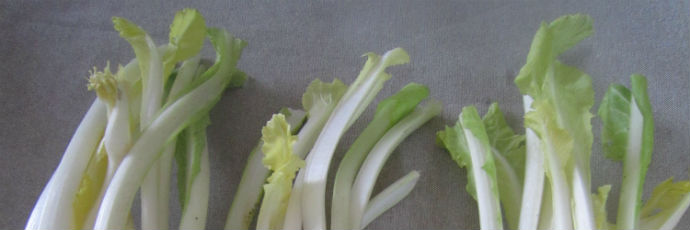
Yukina is a leafy vegetable, the consumption of which dates back to the governor of Yonezawa, Uesugi Yozan (1751-1822) who was responsible for the subsequent diffusion of the vegetable. Yozan brought several vegetable varieties to Yonezawa from Niigata, and today’s Yukina is a result of a selection of these. Yukina belongs to the Kabuna species (Brassica rapa L.) of native Japanese turnips. It is one of the few vegetables that used to be cultivated in the old New Year period because it can be grown in the snow, extending the stem and leaves above it. The most commonly used recipe was “Fusube zuke”, in which the turnip was boiled and then preserved in salt. Yukina has a pleasant, sweet flavour especially if eaten raw. It can be used in salads or Miso soup or as Ohitashi (boiled and cooled), sautéed, or as Nabemono (boiled with other ingredients). The seeds are sown in late August and the turnip is harvested in late November. At this point it is covered with newspaper, straw and earth, until it begins to snow. The snow creates an ideal climate for growth of the stem of the plant. The end product is harvested from December through to mid-February. Most producers are elderly (sixty years old on average) and numbers have diminished considerably. For this reason the remaining producers have been brought together in the Yukina Consortium of Kaminagai in the city of Yonezawa. Compared to other products, Yukina requires lengthy cultivation and complex growing techniques which prevent mass production. If Yukina is to be recovered, also supporting the production of the transformed products such as “Fusubezuke” should be promoted, and local recipes made available. Yukina’s traditional cultivation area are the Kaminagai, Koshida and Toyama areas of the city of Yonezawa.
Back to the archive >
