Zanahoria morada o morá
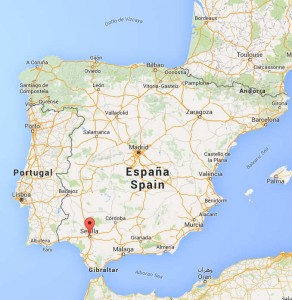
The purple carrot came from the Eastern Mediterranean, though it probably has south-east Asian origins. Some say that it originated in Afghanistan, given the diversity of wild plants in that country. It has long dark green leaves; the pointed root is purple, though the flesh is white. It has a sweet flavor that leaves an aftertaste of beet. It is mainly eaten raw, grated or in salad: if cooked it loses some of its flavor. It is a biennial crop (it needs to grow for two seasons to produce seed), but in particularly mild climatic conditions it can become an annual crop, as is the case for Andalusian chard. It is cultivated similarly to the Nantes carrot: there are 800 to 1300 seeds present in one gram. The seeds are planted at a certain depth in rows at a spacing of 1-4 cm. Three grams are sufficient to sow 30 square meters. Sowing occurs between September and March in the Sierra of Cadiz, but September is the best month (since the crop benefits from the autumn-winter rains). To select the plants intended for producing seeds, the roots are dried and particular criteria considered: leaves and roots in a good state; a homogeneous root color and shape, etc. When the seed has been cleaned and dried, it has to be kept in a cool, dark and dry place, without sharp temperature variations. The purple carrot is traditionally cultivated in the Sierra Cadiz and province of Conil (Andalusia). It is also grown in some parts of Aljarafe (Seville) and Valencia.
Back to the archive >