


Saccharum officinarum a member of the grass family (Poaceae), was first domesticated in New Guinea and the islands east of the Wallace Line by Papuans, where it is the modern center of diversity. From New Guinea it spread westwards to Southeast Asia, where it hybridized with Saccharum spontaneum.
Malimama – also known as miracle sugar- is one of the sugarcane varieties planted by local farmers in small quantities and found in backyards. Local people have called it “miracle sugar” because it refers to its healing properties. Indeed, people claim that it possesses properties that can help heal pneumonia, cough, kidney stones and other disease.
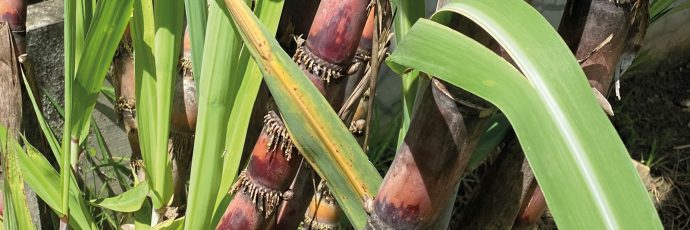
This variety – and the badila sugar cane – was used widely in the areas of La Carlota City and the rest of the province. The plants were medium purplish to dark-colored canes with distinguishable stripes at each eye bud or node. Physiological characteristics vary, depending on the geographical location and environmental factors such as slopes, moisture stress, sunlight exposure, and varietal difference, and the like. For example, healthy canes were seen when planted near the flowing water or rivers in the area. Others were pale, thin, and purplish in the sloping areas where there is water shortage.
The Malimama sugar cane also possesses distinct morphological characteristics: each stalk of the plant cane has healthy eye buds or nodes from the top to bottom. When cut into ideal sizes, each node or eye bud serves as a good planting material, making the whole stalk utilized. It also has a distinct taste, sweet and chewy, different color which makes it unique from the existing varieties. Sugar cane grows for 12 to 16 months before being harvested between June and December each year. When harvested, the cane stands two to four meters high. Malimama was the preferred choice by the locals for its sweetness and the freshness of its juice but it is also consumed grilled (sugba) or directly eaten raw.
Malimama sugar cane – together with the Badila variety – flourished in Negros. Nowadays it is virtually unknown and seldom seen apart from in the yards of small farmers and households. It was replaced with hybrid sugar cane varieties, considered more resistant to rats infestations and disease.
Back to the archive >
