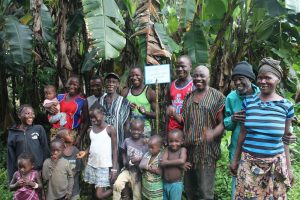
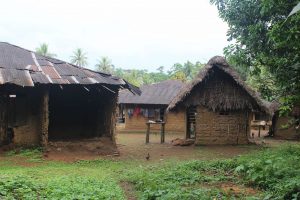
Twenty people from the small Wuloma village, in southern Sierra Leone, have created a community garden on a surface of more than 2.5 hectares. The garden is on the side of a hill, but during the dry season some plants are grown in the more humid areas in the valley.
Vegetables are the main crops: sweet potatoes, peppers, eggplants, tomatoes, broad beans, pumpkins, taro and local varieties such as sawa-sawa and krain-krain (a jute variety whose edible leaves are used in many Sierra Leone dishes); a part of the garden is also used to grow local medicinal plants, such as yumbuyambei, gbangba and njasui.
Used farming techniques are clean and sustainable: the soil is fertilized with compost, manure and ash. Crops are protected from rodents and other wild animals with fences and traps, and insects are kept at bay with local traditional techniques. An effective repellent against grasshoppers, for instance, is produced by grinding a few grasshoppers with chili leaves and adding water; the mixture is then filtered and the obtained liquid is sprayed on the plants.
Area
Wuloma