Slow Food
  • Donate
  • Join us
  • Italian
  • English
Slow Food Foundation

Search

  • Home
  • About us
    • What is the Foundation?
  • What We Do
    • Slow Food Gardens in Africa
    • Slow Food Presidia
    • Ark of Taste
    • Slow Food Cooks’ Alliance
    • Earth Markets
    • What is the Narrative Label?
  • Get involved
    • Why Support Us
    • Italian Slow Food Presidia Sponsors
  • Multimedia
    • Publications
    • Video
    • Gallery
    • News archive
    • Photo archive
  • Contacts
Slow Food Foundation Slow Food Foundation
  • Home
  • About us
    • What is the Foundation?
  • What We Do
    • Slow Food Gardens in Africa
    • Slow Food Presidia
    • Ark of Taste
    • Slow Food Cooks’ Alliance
    • Earth Markets
    • What is the Narrative Label?
  • Get involved
    • Why Support Us
    • Italian Slow Food Presidia Sponsors
  • Multimedia
    • Publications
    • Video
    • Gallery
    • News archive
    • Photo archive
  • Contacts

Search

Home » 10.000 Orti in Africa » Wokodorou Community Garden, Parakou

Wokodorou Community Garden, Parakou

Back to the archive >

Benin

Borgou

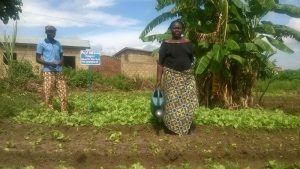
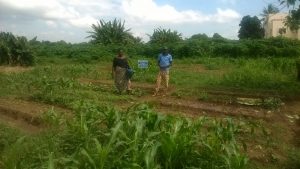
This roughly 400 m2 community garden is found in a low-lying area of the Wokodorou neighborhood of Parakou, the third special-status city in the north of Benin.
The garden, managed by the Women’s Association of Wokodorou, was formed in 2005 and in the beginning had 12 members. The perception of the usefulness of the group’s activities has brought in another 25 people to the group, for a total of 37 members, all of whom are adults. The group has a president, a treasurer, three organizers, a secretary, and the remaining women are all normal members. This group came into contact with Slow Food for the first time in June 2015 thanks to the Association of Volunteers for Lasting Development (AVD) of Benin.
The crops benefit from the presence of a method for holding water for irrigation purposes. The production in the off season (the dry months) has been adopted by the group. During the rainy season the products harvested are more difficult to sell. The group produces just enough crops for the personal consumption of the group members.
Some of the crops grown here are eggplant, okra, legumes, cabbage, apples, tomatoes and peppers, all of which are local varieties, as well as grains like maize and rice. The garden is managed by the group that cultivates it. The products are in part consumed by the members of the group while another part is sold. The revenues are used to buy new gardening equipment, to help members financially if they need money for health care or school, and for the subsidy of grains for all members of the group.
The soil is fertilized using traditional methods: namely compost made on site. This not only allows for their produce to develop well, but it also helps preserve the soil’s well-being. The women fight of insects and pests with natural methods and also conserve the seeds.

Area
Woré, 3rd Arrondissement, Parakou, Borgou

Coordinator
Vianio Kougblenou
Products

  • Eggplant
  • Okra
  • Cabbage
  • Tomato
  • Chilies
  • Maize
  • Rice

Slow Food in Benin

The West African country of Benin is home to around 40 different ethnic groups with very strong traditions. The national economy is based on agriculture—mostly extensive—in which 70% of the active population is engaged. The safeguarding of biodiversity and access to land (problematic due to the lack of ownership rights and land grabbing) are the main challenges facing the Slow Food network in Benin. Slow Food began to gain a foothold in the country in 2004, after the first Terra Madre gathering in Turin. The network has evolved around the school and community food gardens scattered across the country, and has organized exchanges between the convivia, visits, shared planning meetings and the development of a coordinated strategy. The network is now working at a national level to map and promote forgotten varieties of leafy vegetable. In the northern area of Natitingou, known for the cultivation of cotton, tobacco and manioc and the production of gari (manioc flour), the Slow Food convivia have been working since 2015 to create agroecological gardens, seeking out and reproducing forgotten native seeds and cultivating local varieties of taro, white maize, millet, fonio and tiger nut sedge. In other convivia in the south of the country, young farmers have started to organize educational activities for children and training sessions on agroecology and to forge partnerships with local restaurants to develop short supply chains and promote local foods and dishes.

Garden Informations

Type:Community Garden
Surface in m2:400
People involved:37
Slow Food Convivium:Ankiandi Yan’Wan Convivium, Parakou
Coordinator:Gbena Frejusto Do Capio-Vianio Kougblenou
Sibling with:Slow Food Veneto (Italy)

Photos

Subscribe to the newsletter

Slow Food gratefully acknowledges funding support from European Union. The contents of this website are the sole responsibility of Slow Food and the CINEA is not responsible for any use that may be made of the information contained therein.
Slow Food - P.IVA 02743970044 - Privacy Policy - Cookie Policy - All rights reserved
Powered by Blulab