Slow Food
  • Donate
  • Join us
  • Italian
  • English
Slow Food Foundation

Search

  • Home
  • About us
    • What is the Foundation?
  • What We Do
    • Slow Food Gardens in Africa
    • Slow Food Presidia
    • Ark of Taste
    • Slow Food Cooks’ Alliance
    • Earth Markets
    • What is the Narrative Label?
  • Get involved
    • Why Support Us
    • Italian Slow Food Presidia Sponsors
  • Multimedia
    • Publications
    • Video
    • Gallery
    • News archive
    • Photo archive
  • Contacts
Slow Food Foundation Slow Food Foundation
  • Home
  • About us
    • What is the Foundation?
  • What We Do
    • Slow Food Gardens in Africa
    • Slow Food Presidia
    • Ark of Taste
    • Slow Food Cooks’ Alliance
    • Earth Markets
    • What is the Narrative Label?
  • Get involved
    • Why Support Us
    • Italian Slow Food Presidia Sponsors
  • Multimedia
    • Publications
    • Video
    • Gallery
    • News archive
    • Photo archive
  • Contacts

Search

Home » 10.000 Orti in Africa » Tsatee Primary School Garden

Tsatee Primary School Garden

Back to the archive >

Ghana

Greater Accra

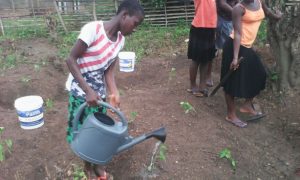
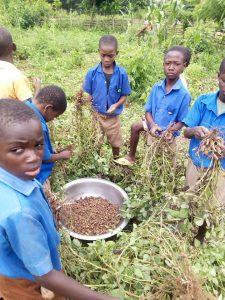
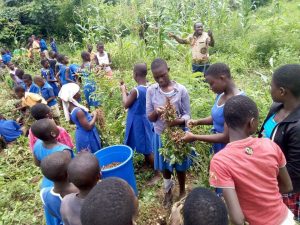
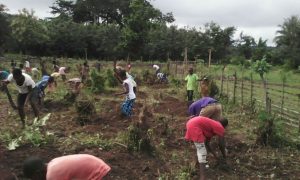
This school garden is located in Tsatee Kpalime, in the South Dayi district of the Volta region, 18 km from the district capital, Kpeve.
Tsatee is an old village of the Kpalime towns, famous for the production of maize and cassava.  The size of the garden is half an acre, involving about 142 pupils aged between 9 to 15, with 69 boys and 73 girls that are assisted by 6 teachers.
The garden is located close to the school compound on a leveled ground. To maintain and increase soil fertility, crop rotation is practiced. Crops cultivated in the garden include: “kpakpo shito” (a local variety of peppers), hot peppers, maize, cassava, onion, tomatoes, "ademe" (the local name of a leafy vegetable in the Ewe Language, scientific name Corchorus olitorius), shallot, cocoyam (local name “mankeni”) and plantains. The school is under the Ghana School Feeding Programme and therefore some produce from the garden is sold to a caterer, who then prepares meals for the pupils. The rest is used to supplement meals and to make them richer.
Some of the local meals that are prepared with the produce from the garden are; kenkey with gravy, plantain with stew, banku with soup.

Area
Tastee Kpalime, South Dayi district, Volta region

Coordinator
Francis K. Eleven

Regional Coordinator – Anthony Mawuena
Slow Food in Ghana

The neocolonization of gastronomy in Ghana is glaringly evident. The majority of the food available in supermarkets and local markets is imported from abroad: Italian beverages, Dutch poultry, Swiss chocolates, South African spirits and tomato paste and tinned fish from Southeast Asia are all readily available. The free distribution of chemical products and fertilizers to farmers has pushed them to move towards monocultures (manioc and oil palm), leaving them dependent on an industrialized and export-oriented model of agriculture. Slow Food has been active in Ghana since 2014. Through the work carried out by around 20 regional volunteers, including professionals like agronomists, educators, gender experts, veterinarians, gastronomists, community leaders and activists, a national coordinating group has been established. Forgotten traditional foods include local red and black rice varieties, wild finger millet (rare and under threat due to the introduction of the white American variety), yam and taro varieties, indigenous leafy vegetables used in porridges and soups, mushrooms and native fish species, among others. In the western part of the country, food communities preserve traditional production methods, like the artisanal extraction of palm oil and baking in traditional ovens. Fishing communities are fighting against unsustainable techniques like trawling, carried out mostly by Chinese-owned boats. Oil exploration is also damaging the coast. In order to be more effective in confronting these challenges, Slow Food is partnering with other local and international organizations and belongs to national farmers’ platforms. Education is an essential part of the Slow Food movement, serving as a trigger for change in consumer habits. The Ghanaian network is therefore working to raise awareness among young people, adults, teachers and women food producers in order to make them conscious producers and careful consumers.

Garden Informations

Type:School Garden
Surface in m2:2000
People involved:150
Slow Food Convivium:SAg-Afiaman Convivium
Coordinator:Philip Amoah
Sibling with:Istituto Comprensivo V. Gemito of Anacapri, Italy

Photos

Subscribe to the newsletter

Slow Food gratefully acknowledges funding support from European Union. The contents of this website are the sole responsibility of Slow Food and the CINEA is not responsible for any use that may be made of the information contained therein.
Slow Food - P.IVA 02743970044 - Privacy Policy - Cookie Policy - All rights reserved
Powered by Blulab