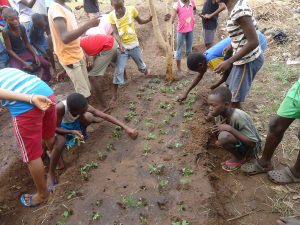
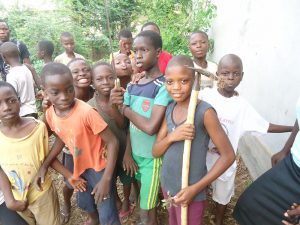
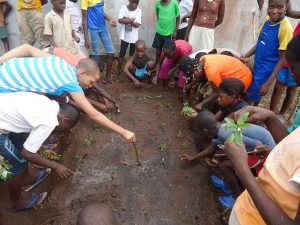
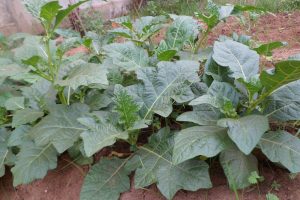
This teaching garden, where the students learn how to grow (both theory and practical) is located in the Abomey-Calavi township, Godomey district, Togoudo quarter, and has been there for more than 10 years. It takes up about 300 m2, the soil is sandy-clayey and fertilised by compost produced on site by a blend of animal waste, ashes, twigs and forest sand. Mulch from tree leaves is used to protect and fertilise the soil. A well more than 70 meters away from the garden is used to irrigate the produce such as: peppers, bananas, carrots, amaranth, nightshade (“gboman” locally), crin-crin, vernonia (“amanvivé” in local dialect), “chôcotô” (tomatoes), “vôvô”, lettuce. To combat the rare caterpillars that appear in the rainy season, they use ashes. The older of the about 50 students from this school actively participate in gardening. Produce from the garden is partly divided among the students and teachers, and the rest is sold to buy new seeds and to replace work tools.
Area
Togoudo quarter, Abomey–Calavi township, Godomey district
Coordinator
Gaston Daniel Oke