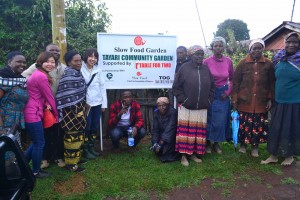
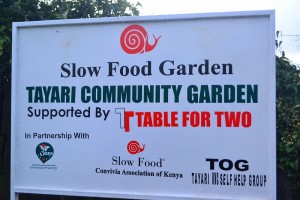
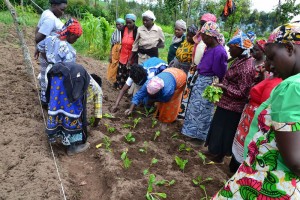
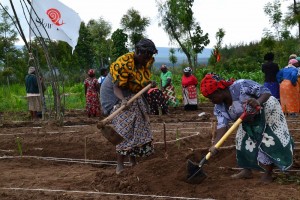
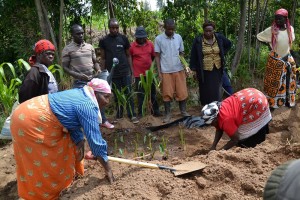
This garden is located in Tayari village, Nakuru county. It was established immediately after one of the members of the group attended the Slow Food gardens in Africa project training session in Central Kenya. The group has 27 members (23 women and 4 men) who take care of the orphans affected by the HIV/AIDs epidemic. They decided to adopt sustainable agriculture practices as way of ensuring that the orphans have access to good, clean and fair food. One of the group members donated a ¼ acre piece of land for demonstration purposes. On this demo-plot, they grow a good number of crops such as amaranth, black nightshade, bell peppers, chili peppers, pumpkins, sweet potatoes, Irish potatoes, arrow roots, baby melons, carrots, beetroots, spider weed, cabbage, “kale”, spinach, onions, lab lab and broad beans. Other crops such as pyrethrum, lemon, tobacco and mexican marigold are intercropped with the food crops to repel pests as well as for making biological pesticides after mixing them with stinging nettles, “michatha” (herbal tree used in the preparation of natural pesticides) and tithonia. They fertilize the garden by using farmyard manure and compost. Irrigation is only done during the dry spells where the members irrigate the crops manually with watering cans. After harvest, the seeds are selected for conservation and the rest of the harvest shared to cater for the orphans’ needs. On some rare occasions, they sell some of the harvests and the money is used to cover some garden expenses.
Area
Tayari village, Nakuru county
Coordinator
Benson Kamau