Slow Food
  • Donate
  • Join us
  • Italian
  • English
Slow Food Foundation

Search

  • Home
  • About us
    • What is the Foundation?
  • What We Do
    • Slow Food Gardens in Africa
    • Slow Food Presidia
    • Ark of Taste
    • Slow Food Cooks’ Alliance
    • Earth Markets
    • What is the Narrative Label?
  • Get involved
    • Why Support Us
    • Italian Slow Food Presidia Sponsors
  • Multimedia
    • Publications
    • Video
    • Gallery
    • News archive
    • Photo archive
  • Contacts
Slow Food Foundation Slow Food Foundation
  • Home
  • About us
    • What is the Foundation?
  • What We Do
    • Slow Food Gardens in Africa
    • Slow Food Presidia
    • Ark of Taste
    • Slow Food Cooks’ Alliance
    • Earth Markets
    • What is the Narrative Label?
  • Get involved
    • Why Support Us
    • Italian Slow Food Presidia Sponsors
  • Multimedia
    • Publications
    • Video
    • Gallery
    • News archive
    • Photo archive
  • Contacts

Search

Home » 10.000 Orti in Africa » Somerset West Village Community Garden

Somerset West Village Community Garden

Back to the archive >

South Africa

Western Cape

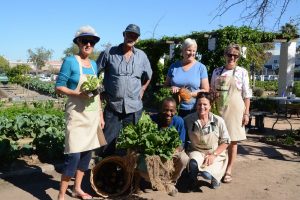
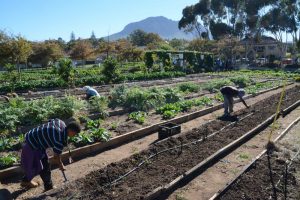
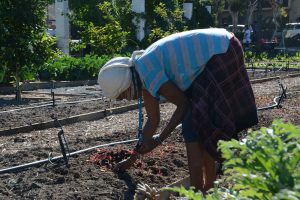
The Somerset West Village Garden was started by a resident, Jenny Findlay, who was concerned with the growing number of homeless people in the area and wanted to help in a positive way. Inspired by a visit to the Oranjezicht City Farm in Cape Town (another community garden in suburbs), she started looking for a suitable piece of land in Somerset West to start a community vegetable garden. She identified a neglected public park in the area and approached the City to secure a 5-year lease on the land. She then partnered with the Helderberg Street People’s Centre and they developed an ‘employment scheme’ whereby homeless people (regarded as volunteers) receive training and work in the community garden in exchange for tokens, which can be redeemed for food, clothing and other things. Jenny has found that vegetable gardening has a therapeutic and uplifting effect on the volunteers (homeless people), and some have shown great aptitude and skill. Two people are now paid stipends for playing a supervisory role. The garden is very productive, with most of the produce donated to the Street People’s Centre (where it is used to provide nutritious meals). In addition, there is a weekly farmer’s market where local residents can buy fresh vegetables from the garden. Jenny said to us: “Eight years ago I watched a BBC program on how Cuba survived sanctions that the USA implemented against them by growing vegetables on every available open piece of land. A model was implemented where the street people grew vegetables and sold them at a market each Friday, I loved the idea and felt that it would be possible to use this model in South Africa.
I visited the Oranjezicht City Farm three years ago and was so inspired that I started looking around in Somerset West for a suitable piece of land to start a Community Vegetable Garden”.
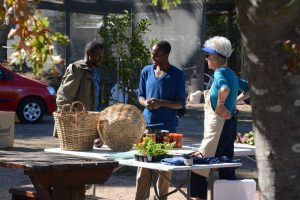
The garden serves a homeless community in Somerset West as well as the residents of Somerset West who buy the vegetables at the weekly garden’s market, each Tuesday morning from 09:00 to 11:00.

Area
Somerset West Village, Cape Town

Coordinator
Jenny Findlay

https://www.facebook.com/pg/Somerset-West-Village-Garden-159403671075129/about/?ref=page_internal
Slow Food in South Africa

In the “Rainbow Nation,” indigenous ethnic groups—the Zulu, Xhosa, Venda and Tsonga to name just a few—have over the centuries been joined by Portuguese, British and Dutch colonizers, then subsequently by waves of Asian immigration. South Africa has the highest number of people of Indian descent outside of India in the world. Hundreds of languages are spoken across the many diverse environments, from the temperate and Mediterranean-like West Cape to the arid Karoo and the subtropical northeast. But the country’s spectacular biodiversity is being destroyed by human activity. Agricultural biodiversity, for example, has been drastically reduced due to the widespread use of GMO seeds. Around 80% of the maize being cultivated is genetically modified. This type of agriculture is linked to the similarly industrialized production of foods high in sugar, salt, fat, additives and refined flour, creating eating habits that are leading to a rapid increase in heart disease and obesity. For these reasons, the Slow Food network in South Africa is working to highlight the relationship between food and health. Awareness is being raised among consumers about the importance of eating local, seasonal food, and the Slow Meat campaign is promoting more responsible meat consumption, with lower quantities, higher quality and the use of different cuts to avoid waste. It is not just consumers who are in need of better information. South Africa also has many small-scale farming families with little basic knowledge who urgently need technical training in order to help them develop sustainable agriculture practices. The 10,000 Gardens in Africa project is therefore of particular importance to the country’s development and the health of its people.

Garden Informations

Type:Community Garden
Surface in m2:4500
People involved:30
Slow Food Convivium:Mother City Convivium
Coordinator:Jenny Findlay
Sibling with:Slow Food Venice Convivium, Italy

Photos

Subscribe to the newsletter

Slow Food gratefully acknowledges funding support from European Union. The contents of this website are the sole responsibility of Slow Food and the CINEA is not responsible for any use that may be made of the information contained therein.
Slow Food - P.IVA 02743970044 - Privacy Policy - Cookie Policy - All rights reserved
Powered by Blulab