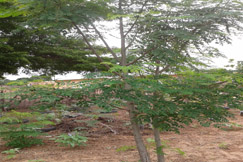
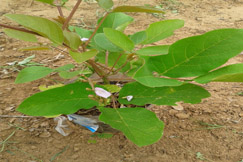
The garden is cultivated by the 302 students (148 girls and 154 boys) of Louly Bafaye village’s public school, found 12 km outside of the capital of Mbour, which is part of the rural community of Sandiara. The school, situated on a large plain which lacks both trees and bushes, is on the periphery of the village.
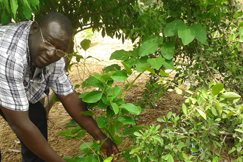
The students take care of the garden under the supervision of a teacher (Modou Fall) and a local expert in horticulture (Mané Faye). The older children take turns, according to a calendar that they have established, watering the plants with water that they bring from the village. This schedule will be in effect until the local well, which was the main source of water for the garden, is restored.
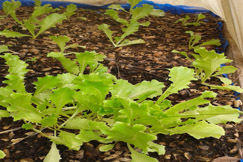
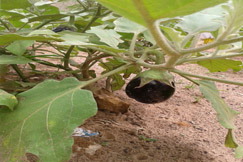
The garden’s principle product is sweet eggplant, followed by onions, lettuce, peppers, niébé (cowpeas) and corn.
The products are consumed in part by the children in the school cafeteria, while the rest is sold (mainly the corn) in the local markets, managed by the school’s coop and the earnings from which go to financing the school itself.
The seeds, which at first were bought, are now produced by the garden for the following seasons.
The soil is fertilized with natural products: compost, manure that the children bring from home (in fact, many of their parents raise horses, cows, calves, donkeys, goats, and some even have chickens), ashes, sawdust and peanut shells (after their parents have finished the shelling process, in preparation for planting in the rainy season). In the same way, in order to protect the plants from insects and parasites, the students and their mentors prepare a mixture of neem leaves (a local plant that thrives throughout the country) tobacco, garlic, pepper and coal ash.
Area
Louly Bafaye village, Mbour region
Coordinator
Cheikh Dieng (Director of the school)