Slow Food
  • Donate
  • Join us
  • Italian
  • English
Slow Food Foundation

Search

  • Home
  • About us
    • What is the Foundation?
  • What We Do
    • Slow Food Gardens in Africa
    • Slow Food Presidia
    • Ark of Taste
    • Slow Food Cooks’ Alliance
    • Earth Markets
    • What is the Narrative Label?
  • Get involved
    • Why Support Us
    • Italian Slow Food Presidia Sponsors
  • Multimedia
    • Publications
    • Video
    • Gallery
    • News archive
    • Photo archive
  • Contacts
Slow Food Foundation Slow Food Foundation
  • Home
  • About us
    • What is the Foundation?
  • What We Do
    • Slow Food Gardens in Africa
    • Slow Food Presidia
    • Ark of Taste
    • Slow Food Cooks’ Alliance
    • Earth Markets
    • What is the Narrative Label?
  • Get involved
    • Why Support Us
    • Italian Slow Food Presidia Sponsors
  • Multimedia
    • Publications
    • Video
    • Gallery
    • News archive
    • Photo archive
  • Contacts

Search

Home » 10.000 Orti in Africa » Ottopé School Garden, Attobrou

Ottopé School Garden, Attobrou

Back to the archive >

Ivory Coast

Agnéby

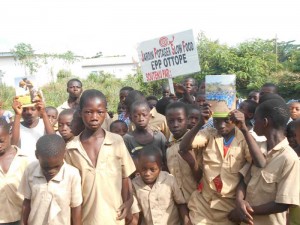
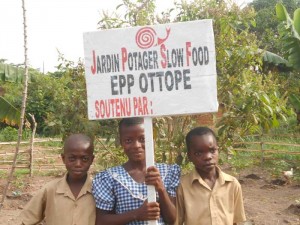
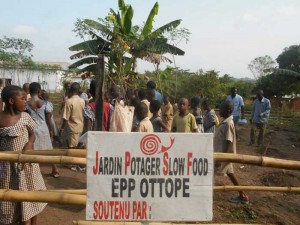
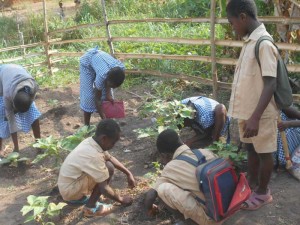
The Attobrou 1 garden is found near the school that cultivates it in a low-lying area of Attobrou, an important rural town in the Agboville department in the south of Ivory Coast. The town is the administrative center of the area.
The half hectare garden is cultivated by 270 students aged between 10 and 15 years old, under the supervision of six professors. They cultivate eggplant, peppers, tomatoes, and Taro (cocoyams), but there are also fruit trees like bananas, plantains, avocadoes and lemons. The garden also has Moringa, a local medicinal plant whose leaves are used to prepare a cure for diabetes, among other uses. The garden is divided into differentiated plots according to the type of crops grown: some are dedicated to market crops (tomatoes, eggplant, etc.), while others are dedicated to fruit trees or tubers.
As the school has a cafeteria, a part of the produce will be eaten during the two weekly meals that it provides. The food that the garden doesn’t produce, like rice and potatoes, are offered by the WFP (UN World Food Program), which helps to guarantee good and fresh food for the children. The surplus crops are sold in local markets by the school’s coop, with the earnings covering the garden’s expenses.

Area
Attobrou Commune, Abgoville Department, Agnéby Region

Coordinator
Assa Assa Jean-Baptiste
Slow Food in Ivory Coast

Côte d’Ivoire, a West African country on the continent’s Atlantic coast, has the strongest economy in the West African Economic and Monetary Union. This economy is primarily based on the export of commodities such as coffee, cacao and palm oil. Apart from this agricultural output being dependent on the fluctuations of the global market, the political crises between 2002 and 2011 also had a heavy impact on the country’s infrastructure and communities, compromising harvests and food production. In 2012, thanks to the 4Cities4Dev project and European Union support, the Slow Food convivia in Côte d’Ivoire began to create community and school food gardens with the aim of providing a supply of quality local food for school meals and families. The Slow Food network in Côte d’Ivoire has consolidated around the gardens project and taste education and is growing stronger thanks to close relationships with Slow Food networks in neighboring countries.

Garden Informations

Type:School Garden
Slow Food Convivium:Cote d’Ivoire Convivium
Coordinator:Huie Célestine Djedji
Sibling with:Il Cuore Si Scioglie Foundation, Italy

Photos

Subscribe to the newsletter

Slow Food gratefully acknowledges funding support from European Union. The contents of this website are the sole responsibility of Slow Food and the CINEA is not responsible for any use that may be made of the information contained therein.
Slow Food - P.IVA 02743970044 - Privacy Policy - Cookie Policy - All rights reserved
Powered by Blulab