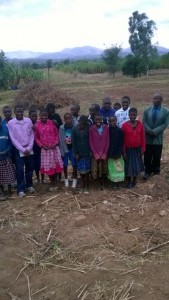
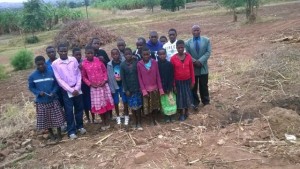
Njakwa LEA primary school was established in 1997 by the local council of chiefs as one way to enhance literacy among young learners. Previously students from the Njakwa area went to Bwengu primary school, which is located 2,5 km away. Njakwa LEA School is located in a historical area of “Chipokawaboli”, a place well known for hosting spirits. The name “Chipokawaboli” means snatching away wives, and it is believed that men have had their wives snatched away by spirits as they passed this place.
The school is in the group of village headman Majimsingo under traditional authority Jalavikuba in Mzimba north district.
The school has an enrolment of 260 students (144 boys and 116 girls). Students who participate in the gardening work are drawn from grades 5, 6 and 7 and their ages range from 10-14 years old.
The school was acquainted with the Slow Food networks through the Bumba convivium in 2014 and patrons participate in every meeting the convivium arranges.
The school has a garden measuring 0.1 ha and the local crops grown include: seem seem (“mutchesi”)
local maize (“kafula”), soy beans, groundnuts (“tchayilosi”), sorghum (“mapemba”), sweet potatoes, cucumbers “vimphwete”, okra, cassava (“mbundumale”), local leafy vegetables like “kamuganje” (mustard), “nyungu” (pumpkins), “berekete” (amaranthus) and “luni” (an indigenous vegetable similar to amaranth). The harvest is used to supplement school meals, while the surplus is sold to cover some of the school’s expenses.
The garden’s soil is fertilized using animal manure from poultry, cattle and goats which are gathered locally from community kraals.
The garden is mostly active during the rainy seasons.
Area
Village headman Majimsingo, traditional authority Jalavikuba, Mzimba north district
Coordinators
M.E Shaba
J.B Chawinga