Slow Food
  • Donate
  • Join us
  • Italian
  • English
Slow Food Foundation

Search

  • Home
  • About us
    • What is the Foundation?
  • What We Do
    • Slow Food Gardens in Africa
    • Slow Food Presidia
    • Ark of Taste
    • Slow Food Cooks’ Alliance
    • Earth Markets
    • What is the Narrative Label?
  • Get involved
    • Why Support Us
    • Italian Slow Food Presidia Sponsors
  • Multimedia
    • Publications
    • Video
    • Gallery
    • News archive
    • Photo archive
  • Contacts
Slow Food Foundation Slow Food Foundation
  • Home
  • About us
    • What is the Foundation?
  • What We Do
    • Slow Food Gardens in Africa
    • Slow Food Presidia
    • Ark of Taste
    • Slow Food Cooks’ Alliance
    • Earth Markets
    • What is the Narrative Label?
  • Get involved
    • Why Support Us
    • Italian Slow Food Presidia Sponsors
  • Multimedia
    • Publications
    • Video
    • Gallery
    • News archive
    • Photo archive
  • Contacts

Search

Home » 10.000 Orti in Africa » Nawaya Educational Garden

Nawaya Educational Garden

Back to the archive >

Egypt

Giza

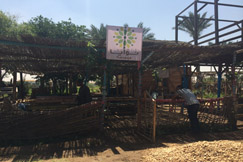
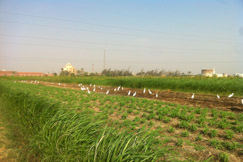
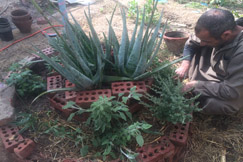
The teaching garden project by the Nawaya organization was launched in October 2013 and involves more than 150 people. It is managed by Aurelia, the local representative for Slow Food, and Ezzat, a farmer from Abu Seer. The garden, flat like the rest of Egypt, is just under a hectare and is located in Abu Seer within the Fangoon Art School.
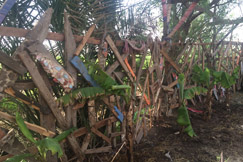
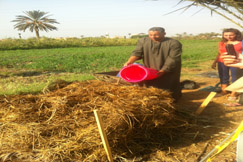
Thanks to the expert advice of Nawaya, various natural cultivation techniques are being tried. For example they use a mix of plants to secure a supply of nitrogen in the soil and improve the fertility of the land which was initially sterile. There were also some trees planted for their capacity for mulching and parasite control.
Gliricidia trees have been planted and are growing very well thanks to the mulch and the high concentration of nitrogen in the soil. To conserve and reinforce the irrigation channel lemongrass and Vetiver trees were planted. A variety of Egyptian Moringa was then chosen for its filtration.
Nawaya will shortly be raising a local breed of poultry to place in the teaching garden both to help preserve a species at risk of extinction and also to enhance sustainable farming systems.
Nawaya is the initiative of a group of young Egyptians busy with the defense of small-scale and sustainable agricultural production. The group decided to create an innovative platform to encourage farmers to adopt sustainable practices. The idea is simple: no farmer will be want to adopt better practices if they don’t have a way of trying them out. Nawaya wants to provide this opportunity for them.

To find out more
http://nawayaegypt.org/Nawaya_Egypt/Nawaya.html

Activity Area
Abusir, Giza governate

Coordinator
Aurelia Weintz
Slow Food in Egypt

Egypt has undergone a dramatic political change during the last four years. The time immediately after the January 25 Revolution in 2011 saw a growth in the civil society movement and increased political activism and entrepreneurial efforts. Three years later, however, the government started to crack down on civil society organizations and put pressure on foreign foundations. Within this context, a general withdrawal into the private sphere has been seen. The increased interest in urban food gardening has been one of the consequences of this process. A relatively risk-free activity, it allows people to shape and change their immediate environment and to literally grow the change they want to see. Against this background, the Slow Food gardens have a clear educational mission: The garden is used to spread knowledge about environmental and ecological topics, to teach the importance of food quality and to foster skills like responsibility, collaboration and communication. At the same time, gardeners young and old have access to fresh, nutritious produce and can learn about the traditional varieties and food cultures of their country. Beyond Cairo, where urban gardens have played an important role in building the Slow Food network, new convivia are forming around various other issues: responsible fishing (Matruh), date biodiversity (Siwa), poultry breeds (the Bigawi Chicken Presidium in Fayoum) and sustainable tourism and the revival of indigenous gastronomy in Sinai.

Garden Informations

Type:School Garden
Slow Food Convivium:Cairo Convivium
Coordinator:Bianca Fliss
Sibling with:Slow Food Turin Convivium, Italy

Photos

Subscribe to the newsletter

Slow Food gratefully acknowledges funding support from European Union. The contents of this website are the sole responsibility of Slow Food and the CINEA is not responsible for any use that may be made of the information contained therein.
Slow Food - P.IVA 02743970044 - Privacy Policy - Cookie Policy - All rights reserved
Powered by Blulab