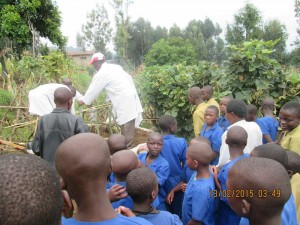
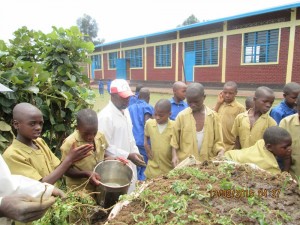
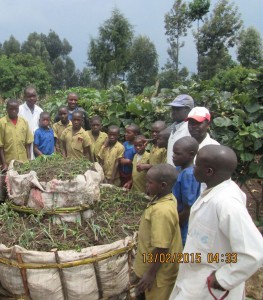
This 20m2 garden is found in the Shingiro sector of the Musanze district, in the country’s north. The school currently has about 480 students and 14 teachers, but those who actually cultivate the garden are mainly a group of 30 students aged between 9 and 11 years old.
The school is situated high up in the mountains and so access to water is a problem that must be overcome. The sandy soil, which is made up of gravel of rocks, along with the garden’s small surface area, force the students to cultivate in tiered planters.
The garden was established in February 2015, thanks to the initiative of the school and the Nuages des Volcans Slow Food Convivium, who saw a problem with the lack of understanding regarding the maintenance of vegetable gardens by local families.
The garden’s vegetables are planted with a mixed cropping system; onions, amaranth, carrots, cabbage, and cauliflower are grown here.
The garden is also an important teaching tool, often used by the teachers to illustrate various points in their lessons. The garden serves to explain the different kinds of plants and to show how they produce in science classes.
The soil is fertilized with manure or compost that is made on-site, which ashes are used as a natural insecticide. A part of the harvest is sold and the revenues are used to cover some of the school’s small expenses and extra-curricular activities.
Area
Shyingiro Sector, Musanze district, northern province.
Coordinator
Adolphe Habimana