Slow Food
  • Donate
  • Join us
  • Italian
  • English
Slow Food Foundation

Search

  • Home
  • About us
    • What is the Foundation?
  • What We Do
    • Slow Food Gardens in Africa
    • Slow Food Presidia
    • Ark of Taste
    • Slow Food Cooks’ Alliance
    • Earth Markets
    • What is the Narrative Label?
  • Get involved
    • Why Support Us
    • Italian Slow Food Presidia Sponsors
  • Multimedia
    • Publications
    • Video
    • Gallery
    • News archive
    • Photo archive
  • Contacts
Slow Food Foundation Slow Food Foundation
  • Home
  • About us
    • What is the Foundation?
  • What We Do
    • Slow Food Gardens in Africa
    • Slow Food Presidia
    • Ark of Taste
    • Slow Food Cooks’ Alliance
    • Earth Markets
    • What is the Narrative Label?
  • Get involved
    • Why Support Us
    • Italian Slow Food Presidia Sponsors
  • Multimedia
    • Publications
    • Video
    • Gallery
    • News archive
    • Photo archive
  • Contacts

Search

Home » 10.000 Orti in Africa » Mkombezi Primary School Garden

Mkombezi Primary School Garden

Back to the archive >

Malawi

Northern Region

Mkombezi Local Educational Authority School was instituted in 1964 by the Village Development Committee (VDC) to assist in promoting basic education among the communities of Mkombezi.
The school was built under the Useful Week Program initiated by the first president of Malawi, DR. Hatings Kamuzu Banda, whose goal was that communities should initiate a project which they felt important for the communities themselves.
The school is under Local Education Authority who chose to establish it due to the long distance children had to travel in order to access education.
The school, which has 751 students and 8 teachers, is located along the Henga Valley, 300m off of M1 road in central Rumphi district, Northern Malawi.
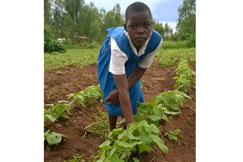
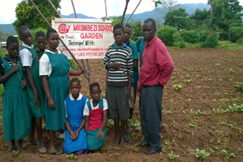
The school garden was launched at Mkombezi in July 2014, thanks to the local Slow Food coordinator who liaised with the Primary Education Advisor (PEA) to establish 3 school gardens in the Mzokoto area.
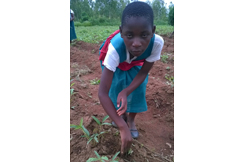
The school garden has a membership of 62 students ranging in age from 9 to 14 years old drawn randomly from various classes, while the club is overseen by several patrons.
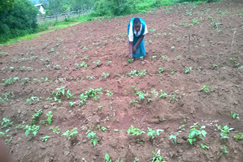
The school has one garden measuring 0.4 ha which is mostly used during the rainy season because the school does not have a piped water system.
Thus far the garden is cultivated with local crops such as: Kankhoma, sweet potatoes (Mphatata), mtchesi, malezi, mapemba.
The school also has a natural tree nursery to help in the reforestation program and to mitigate the impact of climate change.
When the crops have been harvested, some are cooked by the students themselves and eaten at school while the remaining crops are sold locally at the market to raise funds for the school.
The school patrons have attended one training session organized by the Slow Food leadership, though the school intends to arrange its own training sessions where they will invite agriculture extension officers to train them on making compost. Advice on gardening techniques has been given by the Lead farmers who Slow Food Malawi has engaged to assist the school in managing sustainable agricultural practices.

Area
Mwamubiliri Village, Rumphi district, northern Malawi

Coordinator
K. Munthali
Products

  • Sweet potato
  • Sorghum
  • Proso millet
  • Sesame

Slow Food in Malawi

Malawi’s economy is based on agriculture: 85% of the population lives in rural areas and most are farmers. Between the 1980s and ‘90s, the introduction of hybrid seeds and chemical fertilizers brought the agricultural system to its knees, leading to a definitive collapse during the 2015-2016 harvest season, when a drought left more than 6 million Malawians without food and unmasked the false promises of agroindustry. This is why the Gardens in Africa project is of particular importance to Malawi, with many training sessions organized by Slow Food coordinators bringing attention back to simple farming techniques that indigenous peoples like the Tumbuka, Chewa, Yao, Ngonde, Sena and Phoka have never given up. Slow Food has concentrated on raising awareness among younger generations, organizing small-scale events and education activities in schools. The first school gardens were started in the north of the country, around Livingstonia, Mzuzu and Rumphi, and then spread to the central area, near the capital of Lilongwe. The Slow Food network has developed around the 10,000 Gardens in Africa project. The association is well known to the national authorities and civil society, as was demonstrated during Terra Madre Malawi, held on July 4, 2015, in the Lura school garden. Students, parents and farmers were joined by representatives from indigenous communities, the agriculture, health and education ministries and local NGOs like Find Your Feet.

Garden Informations

Type:School Garden
Surface in m2:4000
People involved:64
Slow Food Convivium:Ntchenachena Convivium
Coordinator:Manvester Ackson Khoza
Sibling with:Eataly, Italy

Photos

Subscribe to the newsletter

Slow Food gratefully acknowledges funding support from European Union. The contents of this website are the sole responsibility of Slow Food and the CINEA is not responsible for any use that may be made of the information contained therein.
Slow Food - P.IVA 02743970044 - Privacy Policy - Cookie Policy - All rights reserved
Powered by Blulab