Slow Food
  • Donate
  • Join us
  • Italian
  • English
Slow Food Foundation

Search

  • Home
  • About us
    • What is the Foundation?
  • What We Do
    • Slow Food Gardens in Africa
    • Slow Food Presidia
    • Ark of Taste
    • Slow Food Cooks’ Alliance
    • Earth Markets
    • What is the Narrative Label?
  • Get involved
    • Why Support Us
    • Italian Slow Food Presidia Sponsors
  • Multimedia
    • Publications
    • Video
    • Gallery
    • News archive
    • Photo archive
  • Contacts
Slow Food Foundation Slow Food Foundation
  • Home
  • About us
    • What is the Foundation?
  • What We Do
    • Slow Food Gardens in Africa
    • Slow Food Presidia
    • Ark of Taste
    • Slow Food Cooks’ Alliance
    • Earth Markets
    • What is the Narrative Label?
  • Get involved
    • Why Support Us
    • Italian Slow Food Presidia Sponsors
  • Multimedia
    • Publications
    • Video
    • Gallery
    • News archive
    • Photo archive
  • Contacts

Search

Home » 10.000 Orti in Africa » Millenium Shashemene Secondary School Garden

Millenium Shashemene Secondary School Garden

Back to the archive >

Ethiopia

Oromia

Millenium Shashemene highschool is located in the city of Shashemene, also known for the Rastaferian community settlement initiated by the late Emperor Haile Selassie I. The highschool educates around 2,000 students grade 9 to 10.
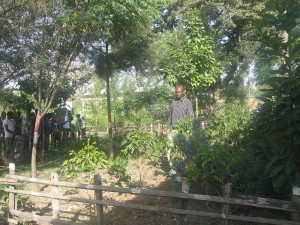
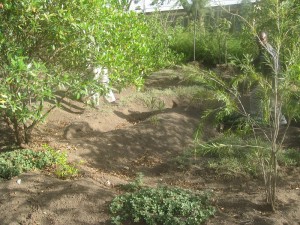
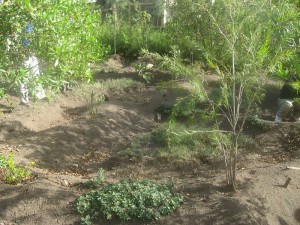
Ibrahim, a math teacher at the school, has undertaken a personal project of greening the school landscape by planting trees and sectioning the gardens into different parks allocated for students, teachers and other activities. As soon as one enters the school compound, one experiences the difference in temperature under the thousands of trees planted in Millenium Shashemene school, compared to the soaring heat in Shashemene. One can also see concrete examples of water harvesting techniques during the dry season applied by Ibrahim. The parks are designed through thoughtful bed design utilizing different types of geometrical shapes, fencing and partitioning of huge peace of land into different sections.
In addition to indigenous and exotic multi-purpose trees and shrubs, Ibrahim and his students have planted 20 mango trees, 20 avocado trees, 50 moringa trees and 50 coffee trees. In his endeavor of many years, Ibrahim has involved and trained 24 students, who are now spreading the work of green cover within their communities. Through the Slow Food training he participated in January, 2016 he has realized the importance of incorporating a vegetable garden in his design. He has prepared two pieces of land about 500 m2 for the cultivation of different types of vegetables. Once the rainy season starts, Ibrahim is planning to cultivate: cabbage, lettuce, chilly pepper, costa (swiss chard), local kale, tomato, carrots and beetroot. He has also made plans to plant additional fruit trees and develop his own nursery and compost preparation. His biggest challenge is dealing with local rodents called “felfel”, that dig underground tunnels and feed on roots of trees and vegetables. Another challenge is access to water during the dry seasons. Garden’s produce will be utilized for selling to the school teachers and students and for consumption by the teachers and the students cultivating the garden.

Area
Shashemene city

Coordinator
Tiginesh Mitik Beyene
Slow Food in Ethiopia

Slow Food has been active in Ethiopia since 2006, launching numerous projects in support of the most vulnerable local communities: nomadic herders, traditional forest beekeepers, wild coffee harvesters, indigenous groups and others. Through the Presidia and working with the communities, training activities have been run to strengthen the organization of small-scale producers and to promote and improve the quality of various foods like honey, camel milk, coffee, traditional grains and spices. Slow Food coordinators promote agroecological techniques—applying them in school and community food gardens—in the most diverse ecosystems, from forests and highlands to nature reserves and semi-arid zones. They are also working to save biodiversity and traditional knowledge. A number of educational projects have objectives that include the involvement of young people and women and awareness-raising around themes of strategic importance at a national and international level: the privatization of resources, the use of toxic chemicals in agriculture, the right to land. Educational materials have been produced in Amharic and Oromo, the main local languages. Every year, Ethiopian delegates participate in Slow Food’s international events (Salone del Gusto and Terra Madre, Indigenous Terra Madre, Cheese, Terra Madre Giovani and more) as well as other events thanks to collaborations with different organizations.

Garden Informations

Type:School Garden
Surface in m2:1000
People involved:2010
Coordinator:Tiginesh Mitik Beyene
Sibling with:Table for Two International

Photos

Subscribe to the newsletter

Slow Food gratefully acknowledges funding support from European Union. The contents of this website are the sole responsibility of Slow Food and the CINEA is not responsible for any use that may be made of the information contained therein.
Slow Food - P.IVA 02743970044 - Privacy Policy - Cookie Policy - All rights reserved
Powered by Blulab