Slow Food
  • Donate
  • Join us
  • Italian
  • English
Slow Food Foundation

Search

  • Home
  • About us
    • What is the Foundation?
  • What We Do
    • Slow Food Gardens in Africa
    • Slow Food Presidia
    • Ark of Taste
    • Slow Food Cooks’ Alliance
    • Earth Markets
    • What is the Narrative Label?
  • Get involved
    • Why Support Us
    • Italian Slow Food Presidia Sponsors
  • Multimedia
    • Publications
    • Video
    • Gallery
    • News archive
    • Photo archive
  • Contacts
Slow Food Foundation Slow Food Foundation
  • Home
  • About us
    • What is the Foundation?
  • What We Do
    • Slow Food Gardens in Africa
    • Slow Food Presidia
    • Ark of Taste
    • Slow Food Cooks’ Alliance
    • Earth Markets
    • What is the Narrative Label?
  • Get involved
    • Why Support Us
    • Italian Slow Food Presidia Sponsors
  • Multimedia
    • Publications
    • Video
    • Gallery
    • News archive
    • Photo archive
  • Contacts

Search

Home » 10.000 Orti in Africa » Meskerem Primary School Garden

Meskerem Primary School Garden

Back to the archive >

Ethiopia

Addis Ababa

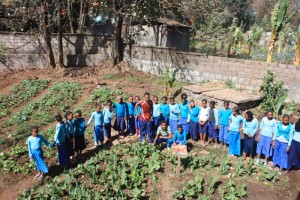
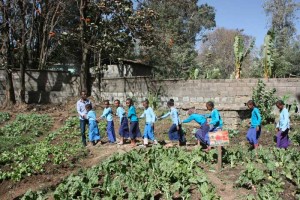
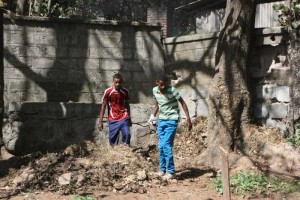
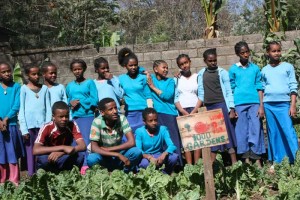
Meskerem elementary school is a large school, educating more than 1,000 school children, from grade one through eight. It is located in the centre of Addis Ababa, the capital city of Ethiopia, in Arat kilo, behind the presidential palace. Up the hill from the school there is an ancient church called Baata Mariam, built by the late Emperor Menilik. Due to the concentration of old indigenous trees in Baata Mariam church, a small stream of clean water flows down the hill from the church all the way through the Meskerem school garden. Abebe Negeri Kelbessa, a science teacher, discovered this stream of water flowing through the school. He mobilized 3 of his students and together they cleaned up and cleared the land behind the school building and developed a beautiful garden, on 500m2, by irrigating the stream water.
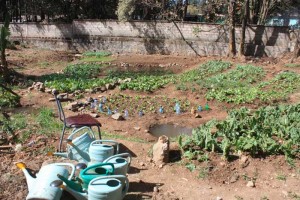
As a result of the training organized by the local Slow Food Ethiopia representatives, the garden has been diversified and the following varieties of vegetables are cultivated: lettuce, swiss chard, tomatoes, beet roots, potatoes, red onions, garlic, cabbage, kale, carrots and ensete (false banana plant, indigenous to Ethiopia). Thanks to the exchange of local seeds during training, this garden now includes an Ark of Taste product, Anchote, as well as local varieties of beans (lab-lab and kidney beans), both of which are seeds produced by other Slow Food gardens in Addis. In order to prevent soil erosion and to collect water, Abebe and his students have created small steps and terraces. The garden is surrounded by large “korch” trees (Erythrina brucei, a tree variety indigenous to Ethiopia, and useful for improving the soil and as a bee forage).
The school children contribute to the compost preparation process by bringing fruit peelings from home. In addition the children take turns watering the garden five at time, using small watering cans that have been supplied. The produce of the garden is regularly harvested and the school children who actively work on the garden are allowed to take vegetables from the garden for home consumption. Some of the garden’s produce is sold and the money collected from the sales of vegetables is used to support the school club and to buy school supplies for low income children who don’t have parents to support them.
The garden project has drawn the attention of government officials from the Ministry of Agriculture, which has promised to supply the garden with seedlings of indigenous fruit trees as well as technical support.

Area
Addis Abeba, Arat Kilo

Coordinator
Tiginesh Mitik Beyene
Slow Food in Ethiopia

Slow Food has been active in Ethiopia since 2006, launching numerous projects in support of the most vulnerable local communities: nomadic herders, traditional forest beekeepers, wild coffee harvesters, indigenous groups and others. Through the Presidia and working with the communities, training activities have been run to strengthen the organization of small-scale producers and to promote and improve the quality of various foods like honey, camel milk, coffee, traditional grains and spices. Slow Food coordinators promote agroecological techniques—applying them in school and community food gardens—in the most diverse ecosystems, from forests and highlands to nature reserves and semi-arid zones. They are also working to save biodiversity and traditional knowledge. A number of educational projects have objectives that include the involvement of young people and women and awareness-raising around themes of strategic importance at a national and international level: the privatization of resources, the use of toxic chemicals in agriculture, the right to land. Educational materials have been produced in Amharic and Oromo, the main local languages. Every year, Ethiopian delegates participate in Slow Food’s international events (Salone del Gusto and Terra Madre, Indigenous Terra Madre, Cheese, Terra Madre Giovani and more) as well as other events thanks to collaborations with different organizations.

Garden Informations

Type:School Garden
Coordinator:Tessema Negesse
Sibling with:Slow Food Monza Convivium, Italy

Photos

Subscribe to the newsletter

Slow Food gratefully acknowledges funding support from European Union. The contents of this website are the sole responsibility of Slow Food and the CINEA is not responsible for any use that may be made of the information contained therein.
Slow Food - P.IVA 02743970044 - Privacy Policy - Cookie Policy - All rights reserved
Powered by Blulab