Slow Food
  • Donate
  • Join us
  • Italian
  • English
Slow Food Foundation

Search

  • Home
  • About us
    • What is the Foundation?
  • What We Do
    • Slow Food Gardens in Africa
    • Slow Food Presidia
    • Ark of Taste
    • Slow Food Cooks’ Alliance
    • Earth Markets
    • What is the Narrative Label?
  • Get involved
    • Why Support Us
    • Italian Slow Food Presidia Sponsors
  • Multimedia
    • Publications
    • Video
    • Gallery
    • News archive
    • Photo archive
  • Contacts
Slow Food Foundation Slow Food Foundation
  • Home
  • About us
    • What is the Foundation?
  • What We Do
    • Slow Food Gardens in Africa
    • Slow Food Presidia
    • Ark of Taste
    • Slow Food Cooks’ Alliance
    • Earth Markets
    • What is the Narrative Label?
  • Get involved
    • Why Support Us
    • Italian Slow Food Presidia Sponsors
  • Multimedia
    • Publications
    • Video
    • Gallery
    • News archive
    • Photo archive
  • Contacts

Search

Home » 10.000 Orti in Africa » Muday Association Community Garden

Muday Association Community Garden

Back to the archive >

Ethiopia

Addis Ababa

Muday Charity Association is a non-profit organization established to help vulnerable women and their children by providing shelter, food, clothes, healthcare and education. It is located in front of Kotebe College, in Yeka sub-city, Addis Ababa, Ethiopia. The association currently assists 740 women and children who are homeless or come from low-income single-parent families. Muday runs a school that educates 205 low-income students for free. The mothers of the children spend the day learning different types of trades such as pottery, weaving, basket-making, cooking and gardening, with the aim of freeing them from dependency and help them develop self-reliance. The Muday Association generates income through several activities, such as selling the crafts made by the women and a dairy farm, as well as from donations.

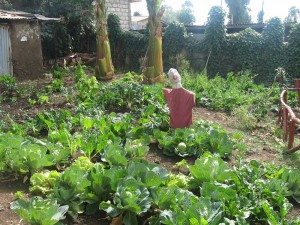
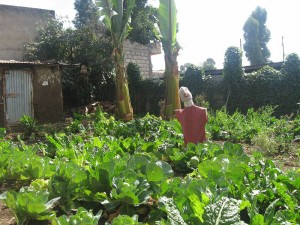
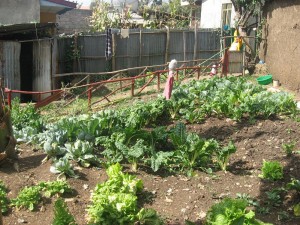
The association is organized around a rotation system, where women take turns learning different trades. After specializing in one trade, the women who are able to generate their own income leave the association and start their own businesses. The community vegetable garden (200 m2) is maintained and managed by a rotating group of 200 women, who all take turns to cultivate and water the garden. Varieties cultivated include local kale, Swiss chard, beetroot, lettuce, cabbage, tomatoes and ensete (the “false banana” plant, indigenous to Ethiopia, whose leaves and roots are used). The garden produce is used for cooking food for the schoolchildren and the mothers supported by the association. The meals are prepared by the schoolchildren’s mothers who are on rotation learning food preparation.

Area
Yeka sub-city, Addis Ababa

Coordinator
Tiginesh Mitik Beyene
Slow Food in Ethiopia

Slow Food has been active in Ethiopia since 2006, launching numerous projects in support of the most vulnerable local communities: nomadic herders, traditional forest beekeepers, wild coffee harvesters, indigenous groups and others. Through the Presidia and working with the communities, training activities have been run to strengthen the organization of small-scale producers and to promote and improve the quality of various foods like honey, camel milk, coffee, traditional grains and spices. Slow Food coordinators promote agroecological techniques—applying them in school and community food gardens—in the most diverse ecosystems, from forests and highlands to nature reserves and semi-arid zones. They are also working to save biodiversity and traditional knowledge. A number of educational projects have objectives that include the involvement of young people and women and awareness-raising around themes of strategic importance at a national and international level: the privatization of resources, the use of toxic chemicals in agriculture, the right to land. Educational materials have been produced in Amharic and Oromo, the main local languages. Every year, Ethiopian delegates participate in Slow Food’s international events (Salone del Gusto and Terra Madre, Indigenous Terra Madre, Cheese, Terra Madre Giovani and more) as well as other events thanks to collaborations with different organizations.

Garden Informations

Type:Community Garden
Surface in m2:200
People involved:200
Coordinator:Tiginesh Mitik Beyene
Sibling with:Table for Two International

Photos

Subscribe to the newsletter

Slow Food gratefully acknowledges funding support from European Union. The contents of this website are the sole responsibility of Slow Food and the CINEA is not responsible for any use that may be made of the information contained therein.
Slow Food - P.IVA 02743970044 - Privacy Policy - Cookie Policy - All rights reserved
Powered by Blulab