Slow Food
  • Donate
  • Join us
  • Italian
  • English
Slow Food Foundation

Search

  • Home
  • About us
    • What is the Foundation?
  • What We Do
    • Slow Food Gardens in Africa
    • Slow Food Presidia
    • Ark of Taste
    • Slow Food Cooks’ Alliance
    • Earth Markets
    • What is the Narrative Label?
  • Get involved
    • Why Support Us
    • Italian Slow Food Presidia Sponsors
  • Multimedia
    • Publications
    • Video
    • Gallery
    • News archive
    • Photo archive
  • Contacts
Slow Food Foundation Slow Food Foundation
  • Home
  • About us
    • What is the Foundation?
  • What We Do
    • Slow Food Gardens in Africa
    • Slow Food Presidia
    • Ark of Taste
    • Slow Food Cooks’ Alliance
    • Earth Markets
    • What is the Narrative Label?
  • Get involved
    • Why Support Us
    • Italian Slow Food Presidia Sponsors
  • Multimedia
    • Publications
    • Video
    • Gallery
    • News archive
    • Photo archive
  • Contacts

Search

Home » 10.000 Orti in Africa » Kaziwiziwi Primary School Garden

Kaziwiziwi Primary School Garden

Back to the archive >

Malawi

Northern Region

Kaziwiziwi Local Education Authority primary school was established in the year 2000 by the Village Development Committee to help young school aged children avoid covering long distances in order to access education. Before the establishment of the school, students used to go either go to Phoka primary school or Homestead or Mahuwi primary schools respectively. These schools are located at an average distance of 8 km away, which resulted in the students being absent for classes often, especially in the rainy seasons as streams could flood and there are no proper bridges to link the sides. The school is now approved by the ministry of education science and technology and offers full classes as provided by the ministry.
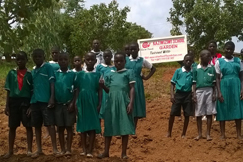
The school has an average enrollment of 244 students ranging in age from 8 – 18 years old, of whom 105 are male and the remaining 139 female. The school management involves all students in the gardening activities because they want everyone to benefit from the knowledge being practiced.
As with the case of other schools in the area, Kaziwiziwi had a school garden planted only with sweet potatoes, though the garden was not active.
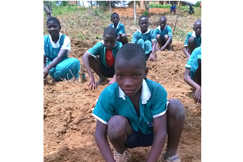
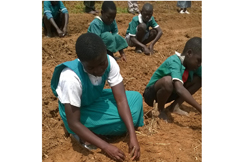
When the school was approached by Slow Food members to resuscitate the gardening activities, they responded without delay and a 0.5 ha garden was re-established and this time was planted with diverse local seeds which include: “berekete” (amaranth), “kasungwana” (a local vegetable), “mono” (a local medicinal plant), “chisokono” (black jack), “mapemba” (sorghum) and “malezi” (millet).
The 70 school garden members are drawn from grades 5-8 and the work is organized on a rotating basis to suit the class timetables.
The produce from the garden is used to prepare meals at school, while some produce is sold to raise funds for the school’s development programs.
The soil in the garden is fertilized using compost made by the students while they also use livestock manure from goats, pigs, and cattle as well as chicken droppings.

Area
Group Village Headman Kambuzikaliwa Msiska, traditional authority Kachulu, northern Rumphi district

Coordinator
Yesaya Nyirenda
Slow Food in Malawi

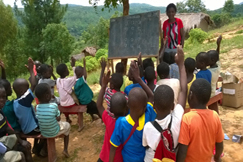
Malawi’s economy is based on agriculture: 85% of the population lives in rural areas and most are farmers. Between the 1980s and ‘90s, the introduction of hybrid seeds and chemical fertilizers brought the agricultural system to its knees, leading to a definitive collapse during the 2015-2016 harvest season, when a drought left more than 6 million Malawians without food and unmasked the false promises of agroindustry. This is why the Gardens in Africa project is of particular importance to Malawi, with many training sessions organized by Slow Food coordinators bringing attention back to simple farming techniques that indigenous peoples like the Tumbuka, Chewa, Yao, Ngonde, Sena and Phoka have never given up. Slow Food has concentrated on raising awareness among younger generations, organizing small-scale events and education activities in schools. The first school gardens were started in the north of the country, around Livingstonia, Mzuzu and Rumphi, and then spread to the central area, near the capital of Lilongwe. The Slow Food network has developed around the 10,000 Gardens in Africa project. The association is well known to the national authorities and civil society, as was demonstrated during Terra Madre Malawi, held on July 4, 2015, in the Lura school garden. Students, parents and farmers were joined by representatives from indigenous communities, the agriculture, health and education ministries and local NGOs like Find Your Feet.

Garden Informations

Type:School Garden
Surface in m2:5000
People involved:72
Slow Food Convivium:Ntchenachena Convivium
Coordinator:Manvester Ackson Khoza
Sibling with:Eataly, Italy

Photos

Subscribe to the newsletter

Slow Food gratefully acknowledges funding support from European Union. The contents of this website are the sole responsibility of Slow Food and the CINEA is not responsible for any use that may be made of the information contained therein.
Slow Food - P.IVA 02743970044 - Privacy Policy - Cookie Policy - All rights reserved
Powered by Blulab