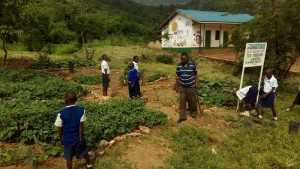
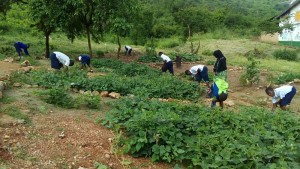
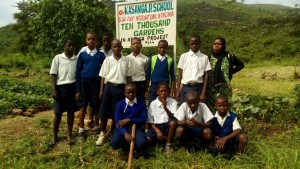
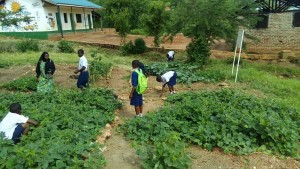
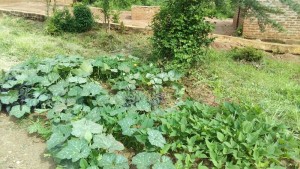
Kasanga primary school is a public school in Morogoro municipality that was started in 2006. The school is situated along the highway from Morogoro to Iringa, 10 km from the Morogoro town center. The total area of the school is 15 acres, out of which 600 m2 has been allocated for the garden. The school has a total of 909 students (442 girls and 467 boys) from class 1 to class 7. 80 students from classes 5 and 6 are involved in managing the garden with the supervision of a teacher who is the garden coordinator, and the help of 4 parents (3 from the school board and 1 representing the community). The school staff also contributes to the garden’s maintenance. The garden was set up in September 2015 since the school management fully embraces the Slow Food philosophy and is eager to provide the scholars with meals of nutritious food without chemicals. Students, parents and school staff are all committed to the garden project: the parents have helped in the terrain’s preparation, provide children with seeds to be planted in the parcel and raise awareness in the community about the importance of the project; the children take care of the garden on a daily basis (weeding, applying the manure, sowing and harvesting); the teachers guide the children’s work in the garden and use it as an educational tool (especially for science lessons).
The main garden crops cultivated here include: pumpkins, “figiri” (Phaeseolus lunatus), “maboga” (sukuma wiki), “matembele” (sweet potato leaves), “mchicha” (Talinum Portulacifolium), spinach and “mnavu” (African nightshade). Natural fertilizer (cow manure) collected from the neighbors is used to enrich the soil. As for the irrigation, during the raining seasons they get the water from a river nearby, while during the dry seasons the scholars bring some water from home or use the rain water collected in a tank. The harvest is used to complement scholars meals generally made up of “ugali” (a stiff dough made of cassava flour, cornmeal, millet, or sorghum) or “makande” (a dish of maize and boiled beans).
Phase two of the plan is to “safeguard the biodiversity of plants and animals for food sovereignty” through training sessions to enhance the Slow Food philosophy and nutritional marketing.
Area
Morogoro Rural District, southern region
Coordinator
Rajab Mdaki