Slow Food
  • Donate
  • Join us
  • Italian
  • English
Slow Food Foundation

Search

  • Home
  • About us
    • What is the Foundation?
  • What We Do
    • Slow Food Gardens in Africa
    • Slow Food Presidia
    • Ark of Taste
    • Slow Food Cooks’ Alliance
    • Earth Markets
    • What is the Narrative Label?
  • Get involved
    • Why Support Us
    • Italian Slow Food Presidia Sponsors
  • Multimedia
    • Publications
    • Video
    • Gallery
    • News archive
    • Photo archive
  • Contacts
Slow Food Foundation Slow Food Foundation
  • Home
  • About us
    • What is the Foundation?
  • What We Do
    • Slow Food Gardens in Africa
    • Slow Food Presidia
    • Ark of Taste
    • Slow Food Cooks’ Alliance
    • Earth Markets
    • What is the Narrative Label?
  • Get involved
    • Why Support Us
    • Italian Slow Food Presidia Sponsors
  • Multimedia
    • Publications
    • Video
    • Gallery
    • News archive
    • Photo archive
  • Contacts

Search

Home » 10.000 Orti in Africa » Kakanitchoé Community Garden

Kakanitchoé Community Garden

Back to the archive >

Benin

Ouémé

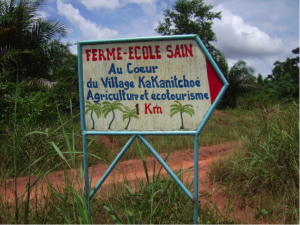
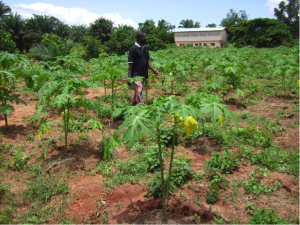
Created in 2000 by Pascal Gbenou, this agro-ecological garden has a surface of 1.5 hectares and belongs to the S.A.IN (Solidaritées Agricoles Intégrées) school farm, where about 300 people are involved. The village of Kakanitchoé, where the farm is located, is in the Kodé Department, 12 km north of the center of Adjohoun.
The school farm trains young people who are not in school ore live in hardship and want to find a job in farming, especially in sustainable farming. It is managed by five resident members, plus a few external members. Students are currently 11 and their training period varies between 18 and 24 months.
The activities – which are inspired by an integrated system – include: animal raising (rabbits, birds, snails and fish) and vegetable production (including food production, horticulture, fruit growing – oranges, bananas, coconut – and rice production). An eco-touristic area, a recreational space and a conference room are also included.
The rice farming area contains a banana grove (with many local endangered varieties) and a garden with medicinal plants.

Area
Kakanitchoé village, Kodé Department, municipality of Adjohoun, Ouémé Department

Coordinator
Pascal Gbenou
Slow Food in Benin

The West African country of Benin is home to around 40 different ethnic groups with very strong traditions. The national economy is based on agriculture—mostly extensive—in which 70% of the active population is engaged. The safeguarding of biodiversity and access to land (problematic due to the lack of ownership rights and land grabbing) are the main challenges facing the Slow Food network in Benin. Slow Food began to gain a foothold in the country in 2004, after the first Terra Madre gathering in Turin. The network has evolved around the school and community food gardens scattered across the country, and has organized exchanges between the convivia, visits, shared planning meetings and the development of a coordinated strategy. The network is now working at a national level to map and promote forgotten varieties of leafy vegetable. In the northern area of Natitingou, known for the cultivation of cotton, tobacco and manioc and the production of gari (manioc flour), the Slow Food convivia have been working since 2015 to create agroecological gardens, seeking out and reproducing forgotten native seeds and cultivating local varieties of taro, white maize, millet, fonio and tiger nut sedge. In other convivia in the south of the country, young farmers have started to organize educational activities for children and training sessions on agroecology and to forge partnerships with local restaurants to develop short supply chains and promote local foods and dishes.

Garden Informations

Type:Community Garden
Surface in m2:10000
Slow Food Convivium:Mangeons Sain Convivium
Coordinator:Nounagnon Emile Houngbo
Sibling with:Centro Raccolta Occhiali Onlus, Italy

Photos

Subscribe to the newsletter

Slow Food gratefully acknowledges funding support from European Union. The contents of this website are the sole responsibility of Slow Food and the CINEA is not responsible for any use that may be made of the information contained therein.
Slow Food - P.IVA 02743970044 - Privacy Policy - Cookie Policy - All rights reserved
Powered by Blulab