Slow Food
  • Donate
  • Join us
  • Italian
  • English
Slow Food Foundation

Search

  • Home
  • About us
    • What is the Foundation?
  • What We Do
    • Slow Food Gardens in Africa
    • Slow Food Presidia
    • Ark of Taste
    • Slow Food Cooks’ Alliance
    • Earth Markets
    • What is the Narrative Label?
  • Get involved
    • Why Support Us
    • Italian Slow Food Presidia Sponsors
  • Multimedia
    • Publications
    • Video
    • Gallery
    • News archive
    • Photo archive
  • Contacts
Slow Food Foundation Slow Food Foundation
  • Home
  • About us
    • What is the Foundation?
  • What We Do
    • Slow Food Gardens in Africa
    • Slow Food Presidia
    • Ark of Taste
    • Slow Food Cooks’ Alliance
    • Earth Markets
    • What is the Narrative Label?
  • Get involved
    • Why Support Us
    • Italian Slow Food Presidia Sponsors
  • Multimedia
    • Publications
    • Video
    • Gallery
    • News archive
    • Photo archive
  • Contacts

Search

Home » 10.000 Orti in Africa » Hope for Youth Primary School Garden

Hope for Youth Primary School Garden

Back to the archive >

Uganda

Mukono

Hope for Youth Primary School is located in Mpoma parish, Nama sub-county, Mukono district. The school has set aside an acre of land for agricultural education, and this is fully utilized and cultivated by the 200 students in the school. The most active group of 20 students has 8 girls and 12 boys. Their activities in the garden are coordinated by their teacher.

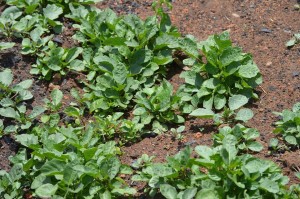
The crops grown in the school garden include maize, “nakati “ (a small red African eggplant), onions, leeks, sweet potatoes, “jjobyo” (spider weed), spinach and cabbages. There is a well-functioning and established area for nursery beds from which seedlings are transplanted to the main garden. All the produce from the garden is incorporated into the school lunch program and eaten by the students.

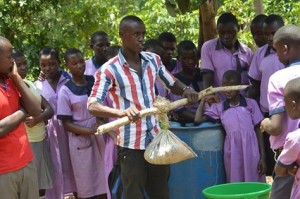
Soil fertility is managed through the use of liquid animal manure which is prepared by the students under the teacher’s supervision during the dry season, and applied to the crops after about three weeks. Animal manure is also used to fertilize the soil, especially during wet seasons.

The pests are managed through the use of intercropping. Due to the sloping nature of the garden, trenches were built in order to control the speed of water down the gradient. Raised beds are also used to control soil erosion. Every season, students and teachers bring the seeds from their homes for planting. As the number of active students increases every school term, the school plans to acquire more tools and equipment as well as conducting more training workshops and allocating more time for gardening activities.

Area
Mpoma Parish, Nama sub-county, Mukono district

Coordinator
Edward Mukiibi
Slow Food in Uganda

Slow Food has been actively supporting the food communities in Uganda since 2006, working with many young volunteers and regional coordinators, creating Presidia and organizing agricultural activities as part of the 10,000 Gardens in Africa project. In 2015, Slow Food Uganda launched its national network, which now comprises over 10,000 activists. Nicknamed the “Pearl of Africa,” the country is rich in water and forest resources, with a tropical climate ideal for agricultural production and pasture-based livestock farming. Though landlocked, Uganda has plenty of flourishing trade links. Over 70% of the population works in the agricultural sector. Major foreign and government investment is concentrated on products for export: coffee, bananas, palm oil, sugar cane, maize, rice, beef and others. These industries are linked to serious human-rights violations. But the promotion of monocultures has terrible consequences for the natural environment and the sustainability of small-scale farmers, thanks to deforestation, the use of chemical fertilizers, pollution, the depletion of community resources and the disappearance of wild plants and less-resistant varieties. What’s more, it also encourages land grabbing and speculation on water and wetlands (rich in plant and animal biodiversity) and the introduction of supposedly more productive exotic livestock breeds, hybrid plants and GM seeds. President Yoweri Museveni—in power since 1986, following years of terrible civil war and dictatorship—and his government publicly promote foreign investment and the sale of national resources. Slow Food Uganda has built up a strong network in the central part of the country and a robust presence in the eastern and western regions and has developed a new strategy for the north. In the central-eastern areas, the focus has been on crops that are typical of the country’s traditional gastronomy and agroforestry systems: bananas, yams and coffee. To the north and west, work has been done on resilience and with indigenous groups, looking at ancient grain varieties and Ankole cattle, a native breed with striking lyre-shaped horns. In order to give a voice to farmers, defend the right to food and develop new and sustainable forms of local economy, Slow Food Uganda organizes annual events, like the Coffee Festival in February, workshops on fruit and vegetables in schools in April and June, the indigenous gastronomy fair in October and the Food Wise event in November. The Earth Markets in Mukono-Wakiso in the central region, Mbale in the eastern region and Lira-Amach in the northern region are held fortnightly. The association also participates in locally run civil-society platforms, involving everyone who supports the need to work simultaneously on agrobiodiversity protection, economic development and education through the proper management of resources. Site: www.slowfooduganda.org

Garden Informations

Type:School Garden
Slow Food Convivium:Mukono Convivium
Coordinator:Edward Mukiibi
Sibling with:Intesa Sanpaolo Fund for charitable, social and cultural donations

Photos

Subscribe to the newsletter

Slow Food gratefully acknowledges funding support from European Union. The contents of this website are the sole responsibility of Slow Food and the CINEA is not responsible for any use that may be made of the information contained therein.
Slow Food - P.IVA 02743970044 - Privacy Policy - Cookie Policy - All rights reserved
Powered by Blulab