Slow Food
  • Donate
  • Join us
  • Italian
  • English
Slow Food Foundation

Search

  • Home
  • About us
    • What is the Foundation?
  • What We Do
    • Slow Food Gardens in Africa
    • Slow Food Presidia
    • Ark of Taste
    • Slow Food Cooks’ Alliance
    • Earth Markets
    • What is the Narrative Label?
  • Get involved
    • Why Support Us
    • Italian Slow Food Presidia Sponsors
  • Multimedia
    • Publications
    • Video
    • Gallery
    • News archive
    • Photo archive
  • Contacts
Slow Food Foundation Slow Food Foundation
  • Home
  • About us
    • What is the Foundation?
  • What We Do
    • Slow Food Gardens in Africa
    • Slow Food Presidia
    • Ark of Taste
    • Slow Food Cooks’ Alliance
    • Earth Markets
    • What is the Narrative Label?
  • Get involved
    • Why Support Us
    • Italian Slow Food Presidia Sponsors
  • Multimedia
    • Publications
    • Video
    • Gallery
    • News archive
    • Photo archive
  • Contacts

Search

Home » 10.000 Orti in Africa » Have E.P. Primary School Garden

Have E.P. Primary School Garden

Back to the archive >

Ghana

Greater Accra

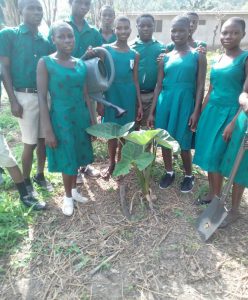
The Evangelical Presbyterian Church Ghana Basic School Have, was established in 1906 by the Bremen Mission (Germany). It is located in Have, in the Afadjato district, of the Volta region in Ghana. It is the biggest school in the district with an enrollment of about 800 pupils and 36 teachers (from Kindergarten to Junior High School)
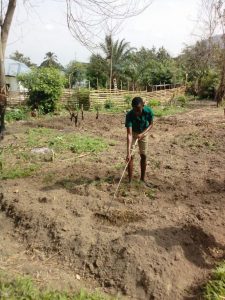
The inhabitants of Have are predominantly peasant farmers, due to the good arable land and vegetation. Hence, the pupils also perform farming activites at school and further develop their skills.
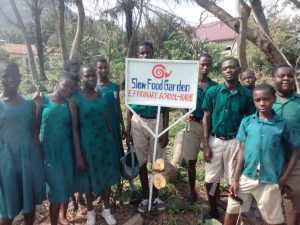
School gardening dates back to the establishment of the school but was abandoned. It has been reintroduced due to the efforts of Slow Food.
The school has a garden measuring about 50 m2 and is located around 200 meters away from the school compound. The garden contains yams, onions peppers, garden eggs, okra, cocoyam, maize and cassava. The garden is supervised by the agricultural club of the school.
There are plans to expand this garden in the future. The school has acquired a bigger plot of land, and this time has involved the whole school.  This idea came about as a result of the school applying to be considered for the Ghana National School Feeding Program, so that the school could be fed with products from the garden.
Also, it will help expand the teaching /learning basis, with the sense that, the plants are used as basic teaching /learning materials by the teachers of the school.
Finally, the expansion will support self-generated income to supplement the school’s efforts financially especially, in purchasing farming tools and equipment.

Area
Have, Afadjato district, Volta region

Coordinators
Emmanuel M.M. Agradi
Vanadem Gbolo
Dellis Korkor

Regional Coordinator
Anthony Mawuena
Products

  • Taro/Cocoyam
  • Yam
  • Onion
  • Eggplant
  • Okra
  • Maize
  • Cassava
  • Bell pepper

Slow Food in Ghana

The neocolonization of gastronomy in Ghana is glaringly evident. The majority of the food available in supermarkets and local markets is imported from abroad: Italian beverages, Dutch poultry, Swiss chocolates, South African spirits and tomato paste and tinned fish from Southeast Asia are all readily available. The free distribution of chemical products and fertilizers to farmers has pushed them to move towards monocultures (manioc and oil palm), leaving them dependent on an industrialized and export-oriented model of agriculture. Slow Food has been active in Ghana since 2014. Through the work carried out by around 20 regional volunteers, including professionals like agronomists, educators, gender experts, veterinarians, gastronomists, community leaders and activists, a national coordinating group has been established. Forgotten traditional foods include local red and black rice varieties, wild finger millet (rare and under threat due to the introduction of the white American variety), yam and taro varieties, indigenous leafy vegetables used in porridges and soups, mushrooms and native fish species, among others. In the western part of the country, food communities preserve traditional production methods, like the artisanal extraction of palm oil and baking in traditional ovens. Fishing communities are fighting against unsustainable techniques like trawling, carried out mostly by Chinese-owned boats. Oil exploration is also damaging the coast. In order to be more effective in confronting these challenges, Slow Food is partnering with other local and international organizations and belongs to national farmers’ platforms. Education is an essential part of the Slow Food movement, serving as a trigger for change in consumer habits. The Ghanaian network is therefore working to raise awareness among young people, adults, teachers and women food producers in order to make them conscious producers and careful consumers.

Garden Informations

Type:School Garden
Surface in m2:50
People involved:836
Slow Food Convivium:SAg-Afiaman Convivium
Coordinator:Philip Amoah
Sibling with:Eataly, Italy

Photos

Subscribe to the newsletter

Slow Food gratefully acknowledges funding support from European Union. The contents of this website are the sole responsibility of Slow Food and the CINEA is not responsible for any use that may be made of the information contained therein.
Slow Food - P.IVA 02743970044 - Privacy Policy - Cookie Policy - All rights reserved
Powered by Blulab