Slow Food
  • Donate
  • Join us
  • Italian
  • English
Slow Food Foundation

Search

  • Home
  • About us
    • What is the Foundation?
  • What We Do
    • Slow Food Gardens in Africa
    • Slow Food Presidia
    • Ark of Taste
    • Slow Food Cooks’ Alliance
    • Earth Markets
    • What is the Narrative Label?
  • Get involved
    • Why Support Us
    • Italian Slow Food Presidia Sponsors
  • Multimedia
    • Publications
    • Video
    • Gallery
    • News archive
    • Photo archive
  • Contacts
Slow Food Foundation Slow Food Foundation
  • Home
  • About us
    • What is the Foundation?
  • What We Do
    • Slow Food Gardens in Africa
    • Slow Food Presidia
    • Ark of Taste
    • Slow Food Cooks’ Alliance
    • Earth Markets
    • What is the Narrative Label?
  • Get involved
    • Why Support Us
    • Italian Slow Food Presidia Sponsors
  • Multimedia
    • Publications
    • Video
    • Gallery
    • News archive
    • Photo archive
  • Contacts

Search

Home » 10.000 Orti in Africa » Green College School Garden, Gboko

Green College School Garden, Gboko

Back to the archive >

Nigeria

Benue

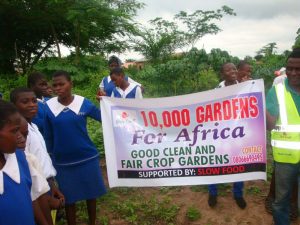
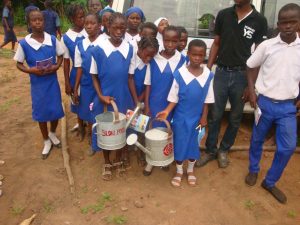
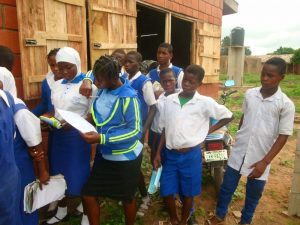
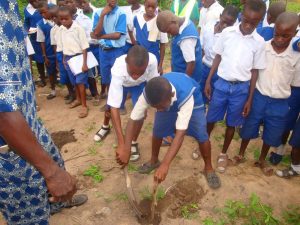
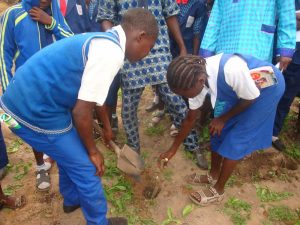
The Green Garden is the school garden of the Commercial College in Gboko. This garden follow the Slow Food good, clean and fair philosophy. It is is located in the town of Gboko, under the Gboko local government in the state of Benue. When the school decided to join the Slow Food gardens project, 12 ha of land were available; 4 are used for the school garden. The project involves over 300 students aged 13-18 and 4 teachers, under the supervision of Mrs. Saaku C.T., the school’s agriculture teacher. The students brought yam tubers, cassava stems, vegetable and bean seeds from their parents’ farms to plant them at the school garden. They have learnt how to plant these seeds and now maintain the garden using agro ecological techniques. The students are also taught how to add value to the harvested products: traditional dishes like “garri” and “akpu” are made from cassava, and yams are dried to make yam flour. They use farm tools like cutlasses, hoes, shovels, rakes, watering cans. They make use of green manure and animal waste to improve the soil fertility. The harvest is shared among the students and teachers, while the surplus is sold to generate income for the school.

Area
Gboko Town, Benue state

Coordinator
Saaku C.T
Slow Food in Nigeria

Nigeria—Africa’s most populous country, with 186 million inhabitants and 36 federated states—has undergone rapid industrialization and urbanization, financed by the exploitation of energy resources (oil and natural gas) and mining. These industries have caused widespread environmental degradation and social conflicts, like the protests of the Niger Delta communities forced to suffer the devastating consequences of pollution and human-rights violations. After these were publicized by writer Ken Saro Wiwa, he was murdered together with eight other activists in 1995. Additionally, until the 1960s and ‘70s, all Nigerian schools taught agriculture and food growing, but the neocolonization of the market and the importation from abroad of up to 80% of foods (including rice, chicken, fish, etc.) have led to the loss of any kind of food-growing culture among young people. In 2011, a young Nigerian member of World Wide Opportunities on Organic Farms (WWOOF) found out about the Slow Food movement and decided to start promoting local foods and saving those at risk of extinction by reintroducing agroecological food gardens into schools through the gardens project, raising awareness among government authorities and creating a network of conscious and supportive producers and consumers. The first steps were taken with the local government in Egbeda in 2013, which supported the reintroduction of agricultural subjects in 23 schools. This was then replicated in another nine states. The objective is to educate people about clean agriculture and the consumption of local food. Encouraging farmers to produce locally is not enough: Many small-scale farmers use traditional methods, but need more information about the negative effects of synthetic chemical fertilizers. Through the food gardens, a mapping of Ark products has been carried out, seed banks have been set up and a network of young people has been created who are trying to bring about change including through the organization of convivial events. In the last few years, the Slow Food network in Nigeria has been working to strengthen partnerships with local associations to tackle together the problem of the big economic and political interests in industrial agriculture, reflected in the spread of monocultures for export (Nigeria is the world’s third biggest producer of palm oil), the opening up to GMOs in 2011 with an experimental project on modified manioc and a 2016 bill that proposed taking lands away from small-scale Fulani farmers in order to use them for grazing and ranching.

Garden Informations

Type:School Garden
Surface in m2:40000
People involved:304
Coordinator:Benjamin Olaniran Olatilo
Sibling with:Andrea and Muni Guerra, Italy

Photos

Subscribe to the newsletter

Slow Food gratefully acknowledges funding support from European Union. The contents of this website are the sole responsibility of Slow Food and the CINEA is not responsible for any use that may be made of the information contained therein.
Slow Food - P.IVA 02743970044 - Privacy Policy - Cookie Policy - All rights reserved
Powered by Blulab