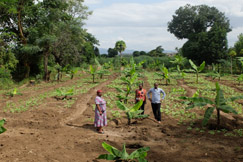
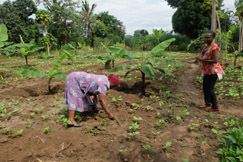
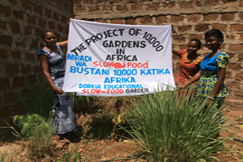
The garden was begun in 2012 thanks to the work of two women: Dorcas Kibona and Rukia Semeto, who wanted to teach about eating food that is natural and produced sustainably. In 2013 the garden began to be used for didactic purposes and joined the Slow Food Garden Project.
The roughly quarter acre of land is found about one km outside the center of Moshi, on a plain at the feet of Mount Kilimanjaro, in an area that is full of biodiversity.
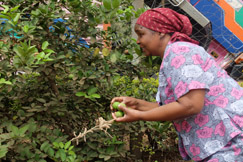
The garden is managed by three women – Dorkas, Rukia, and Gemo – who cultivate varieties of amaranth (for the consumption of both seeds and leaves), soy beans, pumpkin, cassava, sweet potatoes, and lemon grass. They also produce a few kinds of fruits, like mango, papaya, passion fruit, moringa, lime and avocado.
Furthermore, the women of Dorkia have re-introduced kitarasa bananas, a traditional variety that risked disappearing and that is renowned for its nutritional and pharmaceutical properties.
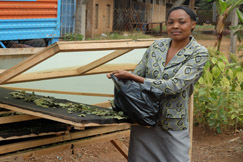
The garden is also used to produce dried goods, like avocado seed powder, lemon grass, cassava seeds, papaya seed powder, pumpkin powder, and banana powder. The products are sold in various regions of Tanzania (Arusha, Dar Es Salaam, Mbeya, and Mwanza) as well as beyond the border, in Kenya.
The soil is fertilized naturally using animal manure or compost made up of banana peels, while the plants are protected from insects and parasites with organic insecticides like cow urine, neem leaves and aloe vera. The harvest is primarily used for consumption while the surplus is sold.
Area
Moshi, Arusha region, northern area
Coordinator
Helen Nguya