Slow Food
  • Donate
  • Join us
  • Italian
  • English
Slow Food Foundation

Search

  • Home
  • About us
    • What is the Foundation?
  • What We Do
    • Slow Food Gardens in Africa
    • Slow Food Presidia
    • Ark of Taste
    • Slow Food Cooks’ Alliance
    • Earth Markets
    • What is the Narrative Label?
  • Get involved
    • Why Support Us
    • Italian Slow Food Presidia Sponsors
  • Multimedia
    • Publications
    • Video
    • Gallery
    • News archive
    • Photo archive
  • Contacts
Slow Food Foundation Slow Food Foundation
  • Home
  • About us
    • What is the Foundation?
  • What We Do
    • Slow Food Gardens in Africa
    • Slow Food Presidia
    • Ark of Taste
    • Slow Food Cooks’ Alliance
    • Earth Markets
    • What is the Narrative Label?
  • Get involved
    • Why Support Us
    • Italian Slow Food Presidia Sponsors
  • Multimedia
    • Publications
    • Video
    • Gallery
    • News archive
    • Photo archive
  • Contacts

Search

Home » 10.000 Orti in Africa » Damawulo school garden

Damawulo school garden

Back to the archive >

Sierra Leone

Eastern

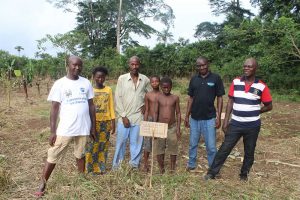
The village of Damawulo sits in a forest rich area along the only dirt road which takes to Liberia. The local school (Kenema District Educational Council) has joined the One Thousand Gardens in Africa project by creating a garden where 153 children aged 6-12 work. They are split into four groups and are coordinated by teacher Wamba Dukulley.
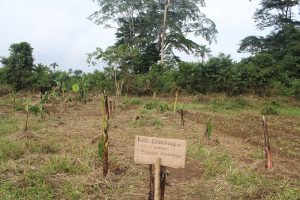
After cleaning the soil, students enclosed the area with a wood and bamboo cane fence. They then sowed various varieties of vegetables, leafy greens and fruit trees, taking the seeds from their own families and nearby villages. The main crops are now cassava, okra, eggplants, chili, sweet potatoes, krain-krain (a jute variety with edible leaves) and banana trees.
As it often happens in the central areas of Sierra Leone, the garden is divided into two parts: one is uphill and one in the valley. During the dry months, vegetables are grown in the valley, where access to water reserves is easier, while during the rainy season plants are transferred to the uphill parcel, so that they are not flooded by the abundant rain.

Area
Damawulo, Kenema district

Coordinator
Wamba Dukulley
Products

  • Potato
  • Cassava
  • Tomato
  • Chilies
  • Pineapple
  • Taro/Cocoyam
  • Bean
  • Banana
  • Moringa oleifera

Slow Food in Sierra Leone

Agriculture is one of the main pillars of Sierra Leone’s economy and provides employment to around 75% of the population. The country has many natural resources and a favorable climate, but over the decades illegal mining and deforestation and large-scale monocultures have caused irreversible damage to many of the country’s natural ecosystems. The Slow Food network is mostly present in the eastern part of the country, between the Kenema and Kailahun districts. One of the most remote and rural regions, it borders Liberia and, to the north, Guinea. The area is famous for diamond mining and was the epicenter of the conflict during the civil war that ended in 2002, as well as one of the hotspots for the devastating Ebola epidemic 12 years later. The lush landscape is dotted with straw-roofed villages, and stretches of forest alternate with rice paddies, as well as many oil palm, coconut, cacao and coffee plantations. While most of the food sold in the supermarkets is imported, the local market stalls offer various types of rice (both local and imported), mountains of sweet potato, cassava and krain-krain leaves, ground peanuts, chilies, palm oil both industrial and artisanal, beans of different sizes, local potatoes, dried and fresh fish, meat and a wide variety of local fruit depending on the season. Slow Food has been working here since 2012. Thanks to the work of three local coordinators and the involvement of small-scale producers through the agroecological community, school and family food gardens and the Slow Food Kenema Kola Nut Presidium (in the three villages of Madina, Gegbwema and Darlu), activities are being run to raise awareness about local biodiversity and the importance of respect for the land, living in harmony with the environment and traditional cultures. The network also organizes educational activities with young people and schoolchildren and celebrations of conviviality with group meals, when the newly harvested produce is shared and toasted with typical beverages flavored with kola nuts and cacao water.

Garden Informations

Type:School Garden
Surface in m2:720
People involved:153
Slow Food Convivium:Gegbwema-Darlu Convivium
Coordinator:Patrick Abu Mansaray
Sibling with:Slow Food Trieste Convivium, Italy

Photos

Subscribe to the newsletter

Slow Food gratefully acknowledges funding support from European Union. The contents of this website are the sole responsibility of Slow Food and the CINEA is not responsible for any use that may be made of the information contained therein.
Slow Food - P.IVA 02743970044 - Privacy Policy - Cookie Policy - All rights reserved
Powered by Blulab