Slow Food
  • Donate
  • Join us
  • Italian
  • English
Slow Food Foundation

Search

  • Home
  • About us
    • What is the Foundation?
  • What We Do
    • Slow Food Gardens in Africa
    • Slow Food Presidia
    • Ark of Taste
    • Slow Food Cooks’ Alliance
    • Earth Markets
    • What is the Narrative Label?
  • Get involved
    • Why Support Us
    • Italian Slow Food Presidia Sponsors
  • Multimedia
    • Publications
    • Video
    • Gallery
    • News archive
    • Photo archive
  • Contacts
Slow Food Foundation Slow Food Foundation
  • Home
  • About us
    • What is the Foundation?
  • What We Do
    • Slow Food Gardens in Africa
    • Slow Food Presidia
    • Ark of Taste
    • Slow Food Cooks’ Alliance
    • Earth Markets
    • What is the Narrative Label?
  • Get involved
    • Why Support Us
    • Italian Slow Food Presidia Sponsors
  • Multimedia
    • Publications
    • Video
    • Gallery
    • News archive
    • Photo archive
  • Contacts

Search

Home » 10.000 Orti in Africa » Bumaliro Primary School Garden

Bumaliro Primary School Garden

Back to the archive >

Uganda

Mbale

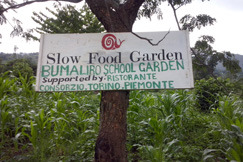
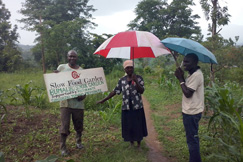
Students from all classes at Bumaliro Primary School, located in a rural area near Mt. Elgon in Eastern Uganda, are cultivating their half-acre food garden under the guidance of science teachers. Crops cultivated in the garden include beans, cassava and maize Intercropped with sweet potatoes and young bananas. The school is also committed to planting trees – both on school grounds and in the community – and has been planting fruit trees along roads leading to the school and mixing trees with crops in agro-forestry applications. All of the seeds are collected by teachers and pupils from their own gardens and from farmers in their communities, and are multiplied for the next season. The garden is primarily for educational purposes, being too small to provide food for school meals, and students learn enough about good farming practices and local products, to be able to start their own sustainable food garden at home to help feed their families.

Garden Location
Bukiende Subcounty, Mbale District

Coordinators
Maswere Francis, Nandutu Lydia
Slow Food in Uganda

Slow Food has been actively supporting the food communities in Uganda since 2006, working with many young volunteers and regional coordinators, creating Presidia and organizing agricultural activities as part of the 10,000 Gardens in Africa project. In 2015, Slow Food Uganda launched its national network, which now comprises over 10,000 activists. Nicknamed the “Pearl of Africa,” the country is rich in water and forest resources, with a tropical climate ideal for agricultural production and pasture-based livestock farming. Though landlocked, Uganda has plenty of flourishing trade links. Over 70% of the population works in the agricultural sector. Major foreign and government investment is concentrated on products for export: coffee, bananas, palm oil, sugar cane, maize, rice, beef and others. These industries are linked to serious human-rights violations. But the promotion of monocultures has terrible consequences for the natural environment and the sustainability of small-scale farmers, thanks to deforestation, the use of chemical fertilizers, pollution, the depletion of community resources and the disappearance of wild plants and less-resistant varieties. What’s more, it also encourages land grabbing and speculation on water and wetlands (rich in plant and animal biodiversity) and the introduction of supposedly more productive exotic livestock breeds, hybrid plants and GM seeds. President Yoweri Museveni—in power since 1986, following years of terrible civil war and dictatorship—and his government publicly promote foreign investment and the sale of national resources. Slow Food Uganda has built up a strong network in the central part of the country and a robust presence in the eastern and western regions and has developed a new strategy for the north. In the central-eastern areas, the focus has been on crops that are typical of the country’s traditional gastronomy and agroforestry systems: bananas, yams and coffee. To the north and west, work has been done on resilience and with indigenous groups, looking at ancient grain varieties and Ankole cattle, a native breed with striking lyre-shaped horns. In order to give a voice to farmers, defend the right to food and develop new and sustainable forms of local economy, Slow Food Uganda organizes annual events, like the Coffee Festival in February, workshops on fruit and vegetables in schools in April and June, the indigenous gastronomy fair in October and the Food Wise event in November. The Earth Markets in Mukono-Wakiso in the central region, Mbale in the eastern region and Lira-Amach in the northern region are held fortnightly. The association also participates in locally run civil-society platforms, involving everyone who supports the need to work simultaneously on agrobiodiversity protection, economic development and education through the proper management of resources. Site: www.slowfooduganda.org

Garden Informations

Type:School Garden
Coordinator:Fredrick Jordan Wabusima
Sibling with:Consortium Restaurant Torino, Italy

Photos

Subscribe to the newsletter

Slow Food gratefully acknowledges funding support from European Union. The contents of this website are the sole responsibility of Slow Food and the CINEA is not responsible for any use that may be made of the information contained therein.
Slow Food - P.IVA 02743970044 - Privacy Policy - Cookie Policy - All rights reserved
Powered by Blulab