Abune Basilos Kindergarten and Primary School is located near Ayer Tena in one of Addis Ababa’s poorest neighborhoods, near the city’s main dump, known locally as “koshe tera.” Low-income households can afford to live in this neighborhood, which is undesirable because of the smell coming from the dump and the chemicals released from decomposing refuse. The Abune Basilos school educates around 3,500 students from this community, from kindergarten to 8th grade. The rising cost of food in Addis Ababa has forced low-income parents to send their children off to school without feeding them. Empty stomachs combined with the chemicals released from the dump have created bad health conditions, causing students to faint on a daily basis. At one point the school had to close down due to the high number of students fainting. Fortunately local NGOs have started to intervene with school feeding programs and garden development initiatives.
The school compound is quite large, and the land has been divided up between different activities supported by local NGOs. There is a dairy farm with 10 milk cows, initially brought in and managed by a local NGO which has now phased out and transferred management to the school administration. A glass of milk along with a piece of bread is given as breakfast to 200 kindergarten children as part of a school feeding program. Yenat Weg, a local NGO started by the prime minister’s wife, also provides a school feeding program for a small number of students. Medhin, another local NGO, has dug a borehole and provided a water tank and drip irrigation kits for low-income or disabled members of the community to utilize so they can grow their own food. These members had been given 10,000 m2 within the school compound for growing vegetables to sell to the local community, but due to misunderstandings with the previous school director the project has been abandoned.
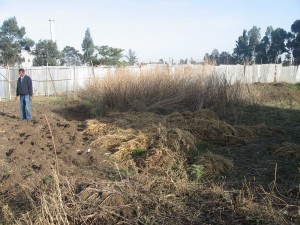
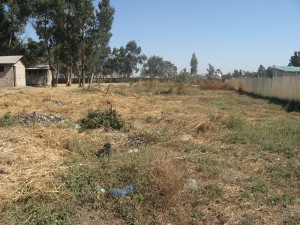
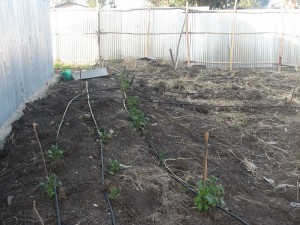
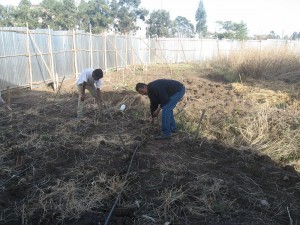
Besides the community garden, Abune Basilos school was also famous for developing school gardens. Two school teachers led the development of vegetable gardens in the past. They have recently participated in the Slow Food 10,000 Gardens in Africa training held in Addis Ababa in February 2016 and are willing to revive the project, with the involvement of about 20 students. They have designated a piece of land of about 300 m2 next to the dairy farm for the school gardens project. The fuel-powered water pump that is used to extract water from the borehole needs a regular fuel input to operate. In addition to providing tools and seeds the Slow Food school garden budget will cover the cost of the fuel for at least six months, until the garden is productive enough to sustain itself. A fence will be constructed around the garden to protect it from destructive students. Cow dung from the dairy cows can be used to fertilize the soil.
The products from the garden will be sold at a reasonable price to students, teachers and parents. The school feeding program related to the cows provides breakfast only. The left over milk is sold to the school community at a low price compared to market prices of milk. There is another school feeding program sponsored by a local NGO that provides lunch to 50 children. Efforts will be made to link this program with the garden project in order to sell part of the produce for food preparation.
Once the school garden has been revived and becomes operational, plans are also underway to revive the community garden at Abune Basilios by resuming communication with members of the community and the school director.
Area
Ayer Tena, Addis Abeba
Coordinator
Tiginesh Mitik Beyene