Slow Food
  • Donate
  • Join us
  • Italian
  • English
Slow Food Foundation

Search

  • Home
  • About us
    • What is the Foundation?
  • What We Do
    • Slow Food Gardens in Africa
    • Slow Food Presidia
    • Ark of Taste
    • Slow Food Cooks’ Alliance
    • Earth Markets
    • What is the Narrative Label?
  • Get involved
    • Why Support Us
    • Italian Slow Food Presidia Sponsors
  • Multimedia
    • Publications
    • Video
    • Gallery
    • News archive
    • Photo archive
  • Contacts
Slow Food Foundation Slow Food Foundation
  • Home
  • About us
    • What is the Foundation?
  • What We Do
    • Slow Food Gardens in Africa
    • Slow Food Presidia
    • Ark of Taste
    • Slow Food Cooks’ Alliance
    • Earth Markets
    • What is the Narrative Label?
  • Get involved
    • Why Support Us
    • Italian Slow Food Presidia Sponsors
  • Multimedia
    • Publications
    • Video
    • Gallery
    • News archive
    • Photo archive
  • Contacts

Search

Home » 10.000 Orti in Africa » Agaarane I Family Garden

Agaarane I Family Garden

Back to the archive >

Somalia

Shabeellaha Hoose

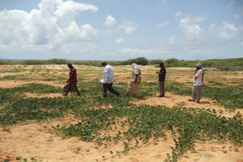
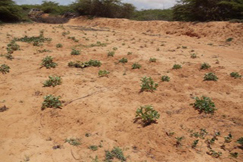
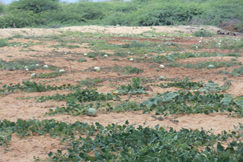
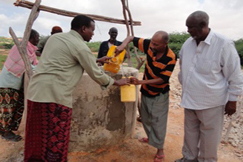
The southern coastal village of Agaarane, situated on the Indian Ocean close to the port city of Merka, is home to around 6,300 citizens whose livelihoods depend largely on agriculture and fishing. Agaarane’s population has been cultivating local food varieties for generations in family gardens that rely on rainwater as the sole form of irrigation. The heavy drought in 2010 caused serious crop losses, however rainfall in August and September 2011 enabled cultivation of crops such as “qare”, a small and very sweet watermelon, and cantaloupe to recommence. The Agaarane family garden measures 8 “jibaals” (a half-acre in local measure) and is cultivated by women and their children and the men assist with the corn crop. In addition to providing general support, the Slow Food gardens project in Africa project will allow the construction of a well to provide water through the dry season. Agriculture has also been suffering due to the unstable political situation. The area fell under the control of the Islamist al-Shabab movement during the recent conflict and farmers are not allowed to hold meetings.

Area
Agaarane village, 70 km southwest of Mogadishu, coastal area of Lower Shabelle region

Coordinator
Merka Convivium Leader
Slow Food in Somalia

Somalia has been subject to one of the worst crises of any country. Long years of anarchy, civil war, tribal conflicts, fundamentalism, banditry and natural disasters have devastated the country, and this prolonged conflict and instability has damaged agricultural productivity. Many farmers have either lost their assets (livestock and irrigation equipment) or been displaced from their land. The production of bananas and other fruits, once Somalia's second largest export after livestock, has been hindered by the civil war and intermittent armed clashes over control of this lucrative export business. Local people, meanwhile, must often depend on international food aid for their survival. Slow Food has existed in Somalia since 2011. Today it has a strong network that promotes sustainable food production, protects food biodiversity by saving many products from extinction through the Ark of Taste project and connects key figures in the country’s food world. Despite the difficult conditions and the political situation since the 1990s, Slow Food has still managed to create a remarkable number of community and school food gardens, planted with crops like lettuce, carrots, tomatoes, white and red onions, sweet and hot peppers, pumpkins, spinach, sesame and maize. The message that Slow Food Somalia wants to send to the world is that we can work together to end this cycle of humanitarian crises by developing the agricultural sector into one that is highly productive, profitable and sustainable.

Garden Informations

Type:Community Garden
Surface in m2:2000
People involved:23
Slow Food Convivium:Merka Coastline Convivium
Sibling with:Arturo and Gabriella Durigon

Photos

Subscribe to the newsletter

Slow Food gratefully acknowledges funding support from European Union. The contents of this website are the sole responsibility of Slow Food and the CINEA is not responsible for any use that may be made of the information contained therein.
Slow Food - P.IVA 02743970044 - Privacy Policy - Cookie Policy - All rights reserved
Powered by Blulab