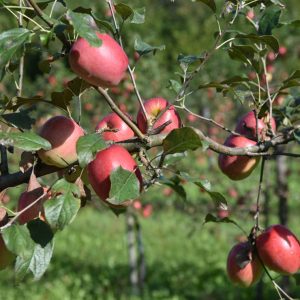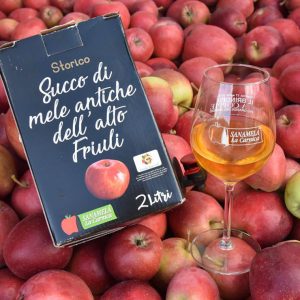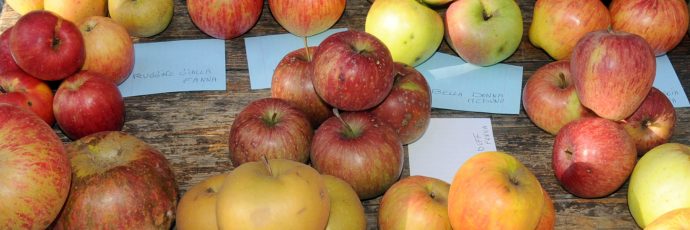
Apples have been cultivated in Friuli-Venezia Giulia since at least the time of the Romans, but it was between the end of the 1700s and the start of the 1800s that apple growing in Friuli really developed, particularly in hilly and mountain areas. From the end of the 19th century until the First World War, the region’s apples were exported around northern Europe (to Austria in particular), to Egypt and even to the United States.
Some of the cultivated varieties were native, while others were imported by Friulians who had emigrated around the world. When they returned home they brought with them grafts and seeds of varieties they thought would produce good harvests. The names of the apples came from the appearance of the fruits or the plants (Ruggine Dorata, Striato Dolce, Blancon), from their ripening, use or flavor (Rosso Invernale), from the place where the plants were found (Zeuka di Treppo, Giallo di Priuso) or the name of the person who introduced or owned them (Marc Panara).
Today the majority of these apples have been replaced by modern varieties, and in many cases only a few trees survive. But a few heirloom varieties are still cultivated and appreciated, even if the numbers are smaller than in the past.
The Di Corone apple has a red skin, a conical shape and firm, crisp white flesh. It is excellent eaten raw and is harvested late (in October), like the Striato Dolce and the Rosso Invernale, which is distinguished by its dark-red, almost wine-colored skin, flattened shape and less sweet flavor. Gialla di Priuso is characterized by a golden-yellow skin and a tart flavor, and stores well until January. The Ruggine Dorata is excellent in desserts: very sweet, yellow, with a rusty brown blush and a wrinkly skin. The same goes for the Blancon, which has a conical shape and a shiny, waxy, yellow skin. The Chei di Rose, yellow and pink in color, is small, fragrant and crisp. The Naranzinis, eaten fresh or stored from September to December, is large and has a red-pink skin. The Marc Panara is even larger, with some fruits weighing as much as 700 grams. The Zeuka apple is still quite common: Sweet, crisp and juicy, it can be stored until as late as April.
Historic orchards of these varieties still survive, but in recent years the interest of dedicated producers and nurseries has led to the planting of new orchards, some of which have several hundred trees. Like all heirloom varieties, they are quite hardy trees, resistant to the major apple tree diseases.
Season
The apples are harvested between September and October, depending on the variety
Back to the archive >Production area
Mountain and foothill areas of Alto Friuli, Pordenone and Udine provinces
Presidium supported by
Uti Carnia
Borgo delle Mele
di Christian Siega
Via General Cantore, 50 A
Pinzano al Tagliamento (Pn)
Tel. +39 333 6462507
info@borgodellemele.it
www.borgodellemele.it
Borgo delle mele processes the apples it grows and those contributed by: Pian dei Tass, Vivaio Ballin.