Slow Food
  • Donate
  • Join us
  • Italian
  • English
Slow Food Foundation

Search

  • Home
  • About us
    • What is the Foundation?
  • What We Do
    • Slow Food Gardens in Africa
    • Slow Food Presidia
    • Ark of Taste
    • Slow Food Cooks’ Alliance
    • Earth Markets
    • What is the Narrative Label?
  • Get involved
    • Why Support Us
    • Italian Slow Food Presidia Sponsors
  • Multimedia
    • Publications
    • Video
    • Gallery
    • News archive
    • Photo archive
  • Contacts
Slow Food Foundation Slow Food Foundation
  • Home
  • About us
    • What is the Foundation?
  • What We Do
    • Slow Food Gardens in Africa
    • Slow Food Presidia
    • Ark of Taste
    • Slow Food Cooks’ Alliance
    • Earth Markets
    • What is the Narrative Label?
  • Get involved
    • Why Support Us
    • Italian Slow Food Presidia Sponsors
  • Multimedia
    • Publications
    • Video
    • Gallery
    • News archive
    • Photo archive
  • Contacts

Search

Home » 10.000 Orti in Africa » Sandiara School Garden

Sandiara School Garden

Back to the archive >

Senegal

Thiès

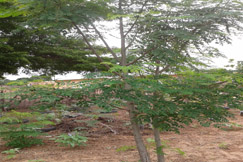
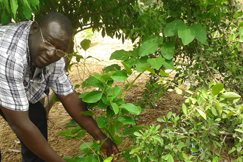
The garden is cultivated by the 302 students (148 girls and 154 boys) of Louly Bafaye village’s public school, found 12 km outside of the capital of Mbour, which is part of the rural community of Sandiara. The school, situated on a large plain which lacks both trees and bushes, is on the periphery of the village.
The students take care of the garden under the supervision of a teacher (Modou Fall) and a local expert in horticulture (Mané Faye). The older children take turns, according to a calendar that they have established, watering the plants with water that they bring from the village. This schedule will be in effect until the local well, which was the main source of water for the garden, is restored.
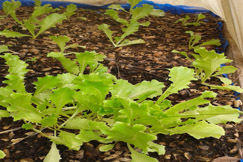
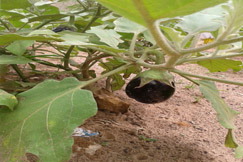
The garden’s principle product is sweet eggplant, followed by onions, lettuce, peppers, niébé (cowpeas) and corn.
The products are consumed in part by the children in the school cafeteria, while the rest is sold (mainly the corn) in the local markets, managed by the school’s coop and the earnings from which go to financing the school itself.
The seeds, which at first were bought, are now produced by the garden for the following seasons.
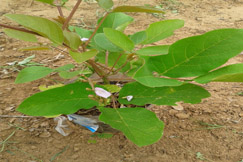
The soil is fertilized with natural products: compost, manure that the children bring from home (in fact, many of their parents raise horses, cows, calves, donkeys, goats, and some even have chickens), ashes, sawdust and peanut shells (after their parents have finished the shelling process, in preparation for planting in the rainy season). In the same way, in order to protect the plants from insects and parasites, the students and their mentors prepare a mixture of neem leaves (a local plant that thrives throughout the country) tobacco, garlic, pepper and coal ash.

Area
Louly Bafaye village, Mbour region

Coordinator
Cheikh Dieng (Director of the school)
Slow Food in Senegal

Despite a diversified industrial base, agriculture and fishing are the dominant sectors in Senegal’s national economy and employ 50% of the active population. Agriculture, in particular, underwent profound transformations during the colonial period, with the gradual replacement of subsistence crops with monocultures destined primarily for export, like peanuts. This led to changes in the food habits of the Senegalese. For example, in urban areas rice is now eaten every day instead of millet and fonio; though hardy, better suited to the local environment and incredibly nutritious, these grains are now considered “poor.” The Slow Food network has been developing here since 2004, working on food education in schools and creating educational food gardens. The mapping of local foods and dishes led to the creation of the Fadiouth Island Salted Millet Couscous Presidium. Members of Italy’s Senegalese diaspora are now also getting involved in setting up sustainable agricultural activities in their home country.

Garden Informations

Type:School Garden
Coordinator:Mame Malick Ndiaye
Sibling with:Slow Food Chioggia, Mestre, Riviera del Brenta Convivia, Italy

Photos

Subscribe to the newsletter

Slow Food gratefully acknowledges funding support from European Union. The contents of this website are the sole responsibility of Slow Food and the CINEA is not responsible for any use that may be made of the information contained therein.
Slow Food - P.IVA 02743970044 - Privacy Policy - Cookie Policy - All rights reserved
Powered by Blulab