Slow Food
  • Donate
  • Join us
  • Italian
  • English
Slow Food Foundation

Search

  • Home
  • About us
    • What is the Foundation?
  • What We Do
    • Slow Food Gardens in Africa
    • Slow Food Presidia
    • Ark of Taste
    • Slow Food Cooks’ Alliance
    • Earth Markets
    • What is the Narrative Label?
  • Get involved
    • Why Support Us
    • Italian Slow Food Presidia Sponsors
  • Multimedia
    • Publications
    • Video
    • Gallery
    • News archive
    • Photo archive
  • Contacts
Slow Food Foundation Slow Food Foundation
  • Home
  • About us
    • What is the Foundation?
  • What We Do
    • Slow Food Gardens in Africa
    • Slow Food Presidia
    • Ark of Taste
    • Slow Food Cooks’ Alliance
    • Earth Markets
    • What is the Narrative Label?
  • Get involved
    • Why Support Us
    • Italian Slow Food Presidia Sponsors
  • Multimedia
    • Publications
    • Video
    • Gallery
    • News archive
    • Photo archive
  • Contacts

Search

Home » 10.000 Orti in Africa » Dorkia Educational Garden

Dorkia Educational Garden

Back to the archive >

Tanzania

Arusha

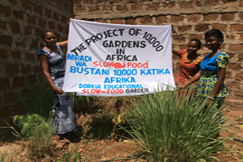
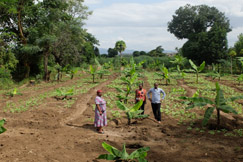
The garden was begun in 2012 thanks to the work of two women: Dorcas Kibona and Rukia Semeto, who wanted to teach about eating food that is natural and produced sustainably. In 2013 the garden began to be used for didactic purposes and joined the Slow Food Garden Project.
The roughly quarter acre of land is found about one km outside the center of Moshi, on a plain at the feet of Mount Kilimanjaro, in an area that is full of biodiversity.
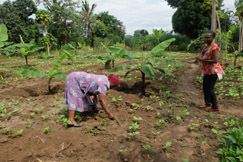
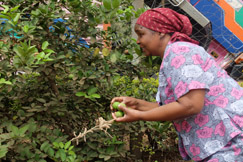
The garden is managed by three women – Dorkas, Rukia, and Gemo – who cultivate varieties of amaranth (for the consumption of both seeds and leaves), soy beans, pumpkin, cassava, sweet potatoes, and lemon grass. They also produce a few kinds of fruits, like mango, papaya, passion fruit, moringa, lime and avocado.
Furthermore, the women of Dorkia have re-introduced kitarasa bananas, a traditional variety that risked disappearing and that is renowned for its nutritional and pharmaceutical properties.
The garden is also used to produce dried goods, like avocado seed powder, lemon grass, cassava seeds, papaya seed powder, pumpkin powder, and banana powder. The products are sold in various regions of Tanzania (Arusha, Dar Es Salaam, Mbeya, and Mwanza) as well as beyond the border, in Kenya.
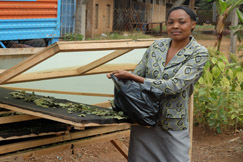
The soil is fertilized naturally using animal manure or compost made up of banana peels, while the plants are protected from insects and parasites with organic insecticides like cow urine, neem leaves and aloe vera. The harvest is primarily used for consumption while the surplus is sold.

Area
Moshi, Arusha region, northern area

Coordinator
Helen Nguya
Products

  • Chinese spinach (A. dubius)
  • Moringa stenopetala
  • Sweet potato
  • Lemongrass
  • Avocado
  • Mango
  • Papaya
  • Kitarasa Banana
  • Soybean
  • Passion fruit
  • Lime
  • Pumpkin (C. maxima)

Slow Food in Tanzania

Slow Food has been developing activities in Tanzania since 2004, when over 20 delegates from the country participated in the first Terra Madre event in Turin, Italy. Now local Slow Food groups are promoting good, clean and fair food across the country, primarily in the north (Kilimanjaro, Meru and Arusha), along the coast (Dar es Salaam region) and in the central-east (Morogoro, Dodoma and Singida). The largest country along Africa’s eastern coast, Tanzania experimented with “Ujamaa” socialism under President Julius Nyerere, one of Africa’s most enlightened 20th-century politicians, who led the country after independence in 1961. Much was invested into education and literary programs, community development and the agricultural sector. Positive effects, such as a lively and pervasive entrepreneurial spirit, can still be seen in this relatively stable country, despite the devastating spread of HIV, which has laid waste to multiple generations and left thousands of orphans, profoundly changing family and social structures. Women, particularly those who are now elderly, are confident and educated, and can act as agents of important change at a socio-political level and as the driving force behind local economies. The initiatives carried out by the Slow Food network to create awareness, achieve food sovereignty and improve everyday nutrition include the safeguarding of traditional beekeeping, the rediscovery of wild vegetables and herbs, the mapping of local banana varieties, the integration of food-growing into school programs, the spread of agroecological practices to improve farmers’ resilience and autonomy and the valuing of the role of young people in training and awareness-raising activities. The major challenges to be addressed are linked to the lack of availability of native seeds and organic inputs, thanks to government policies that favor industrial agriculture and allow foreign investors to indiscriminately take over arable land. In January 2017, the Tanzanian government passed a law that gives Western agribusiness investors faster and better access to agricultural land and strong protection of intellectual property rights, in exchange for development aid. Under this new law Tanzanian farmers are subject to a minimum jail term of 12 years and a fine of over €200 if they sell seeds that are not certified.

Garden Informations

Type:School Garden
Surface in m2:1011
People involved:3
Slow Food Convivium:Lishe Convivium
Coordinator:Helen Tibandebage Nguya
Sibling with:Slow Food Firenze Convivium, Italy

Photos

Subscribe to the newsletter

Slow Food gratefully acknowledges funding support from European Union. The contents of this website are the sole responsibility of Slow Food and the CINEA is not responsible for any use that may be made of the information contained therein.
Slow Food - P.IVA 02743970044 - Privacy Policy - Cookie Policy - All rights reserved
Powered by Blulab