


The mangroves provide the Mandira community’s main resources, with the oyster (Crassostrea brasiliana) being their main one. Oyster gathering is not only the major activity in the community’s social, economic and cultural life, but also presents enormous sustainable potential due to the ecological characteristics of the region and the biological properties of the species. Found on the mainland of Cananeia municipality, the area of mangroves near Mandira is one of the most productive in the lagoon surrounding Cananeia, Iguape and Paranaguá. With the support of local technical experts, a technique to fatten oysters has been introduced. It has proved to be an effective approach as it allows oysters to be sold during the off-season when gathering is not permitted, and the product has a better appearance (and can command higher prices). The fattening farms contribute to the fixation of young oysters in areas where they are installed, significantly reducing the effort to gather them. They are harvested when they have reached a suitable size for sale, cleaned and taken to the Cananéia Oyster Producers Cooperative (Cooperostra), where they are purified for consumption. The women of the community produce imaginative dishes using oysters, such as oyster cake, oyster bread and oyster farofa (toasted manioc flour), which are often sold to tourists visiting the community. The Mandira community comprises descendants of slaves. They have lived in the mainland part of Cananeia municipality since the end of the 18th century and have long used the mangrove area as a source of food and income. The part of it they control was declared the Mandira Extractive Reserve in December 2002. The decision was not only based on its environmental importance, high productivity and high level of conservation. Equally significant were the ability of the community to organize, the importance of oyster gathering as the main source of income for the community for more than twenty years, and the possibility to ensure that the Mandira people had exclusive access to the zone, as there had been recent increasing incursions by gatherers from other areas. The ‘Riserva Extrativista dos Moradores do Bairro Mandira (REMA)’ association was created in 1995 to represent the local community and its main objectives were to create the Reserve and gain recognition for the community as quilombola (achieved in March 2002). Oyster gathering is a family-based system. To eliminate dependence on middlemen when selling oysters and over-exploitation of stocks, the community and local government institutions created the Cananéia Oyster Producers Cooperative (Cooperostra) in 1998. The resources provided by relevant projects have enabled the cooperative to be organized, cooperates to be set up and research to be carried out. Cooperostra’s purification facility was built to purify the product for consumption and sale. In 2002, the Cooperative’s project was nominated as a finalist for the UN award ‘Equatorial Initiative 2002’.
Back to the archive >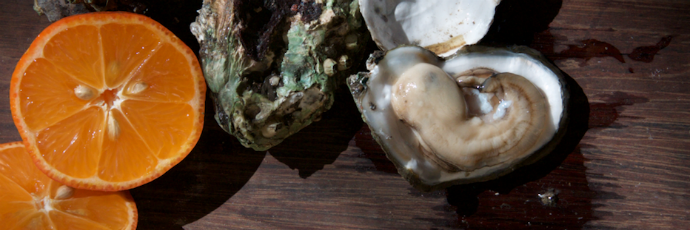
 Students of the Gastronomic Sciences at Pollenzo are collaborating with Slow Food to fill the Ark.
Other info
| Categories | |
| Nominated by: | Francisco de Sales Coutinho |
