


Sen is a powder or starch made from small sized or damaged sweet potatoes, especially the variety nicknamed Kokouimo (also known as ‘Nourin1go’), genetically unchanged since 1937. This variety has a good starch content, reproduces easily, is high-yielding and is very flavorful. The Kokouimo sweet potato can also be baked, boiled or distilled. Sen is made on the island of Tsushima, part of the Nagasaki Prefecture, located between Japan’s mainland and South Korea. It has been used as a supplementary food during famines and eaten as dumplings, mocha, chimaki and a wide variety of noodles. The sweet potato’s unique aroma and sticky consistency results in a crunchy texture after processing. Two different ways of processing sweet potatoes produce two different types of sen. Both were developed in response to the need to recover damaged sweet potatoes.Namsen is made by mashing sweet potatoes with water and filtering the mixture until the starch precipitates out. The starch is then dried in the sun and stored for later use.Sendango is also made by mashing sweet potatoes with water and filtering the mixture, but the softened starch is shaped into a 15 cm round dumpling. This dumpling is then placed on the floor underneath a raised hut, sheltered from the rain and with enough ventilation to be dried in the cold wind. The dried dumplings are then put into a bucket, watered again and mashed into a mortar. Impurities are once again filtered and the resulting precipitation is then fermented in linen cloth. The product is then manipulated by hand into the desired form and dried in morobuta (wooden trays). Sweet potatoes originating from South America were introduced during the arrival of European settlers on Hirado Island, Nagasaki in 1615. Large-scale cultivation started in Japan in 1715. Tsushima’s agricultural cooperative of fourteen producers supplied 570 kg of sen in 2009 and 230 kg in 2010 to various vendors, ranging from ramen stands to local restaurants. The amount of sen eaten by the producers themselves and their families is hard to determine, but can be estimated at about three times the amount sold on the market. After early November, when they are not burdened by farming, the producers use sen make dango (dumplings) and soba (buckwheat noodles) for their own consumption and limited direct sales. Because sen is obtained through a complex, multi-step process, it has become difficult to pass on this unique Tsushima tradition to new generations.
Back to the archive >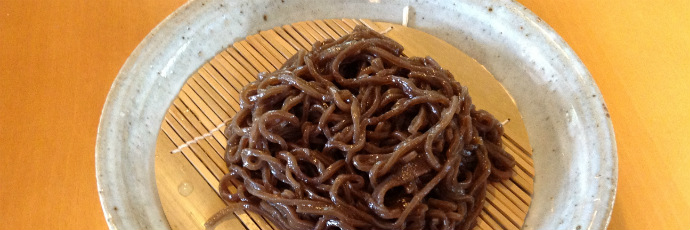
 Students of the Gastronomic Sciences at Pollenzo are collaborating with Slow Food to fill the Ark.
