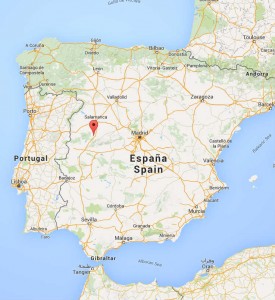
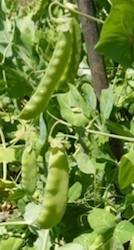
This is a species of sweet pea (Pisum sativum L.) that is especially enjoyable when eaten while fresh and tender because of its thin and juicy characteristics that make it sweeter tasting than other peas. It is a winter crop that can be planted from November to February for an early harvest by the end of spring. It does not tolerate heat well and it will wilt easily in hot summers or from lack of water. The plant is a tall climbing bush (growing 120 to 180 cm) that needs to be entwined, supported by mesh or spread along the ground to be protected. Its leaves are bluish green and its flowers are purple. The ternillos are harvested once the green pod is about 8 to 10 cm long, and the 7 to 9 peas inside begin to form but are not yet fully developed. Depending on the conditions, a plant will produces peas over four to six weeks. The peas are smooth and mostly round, with small black dots. Ternillos are low yielding plants that requires higher care retarding their water intake, need for deep soil, and cultural knowledge (such as the entwining method and awareness of the cryptogamic plant sicknesses to which this variety is susceptible). Currently, ternillos are a small crop, produced in gardens in three locations in southern Sierra de Francia, Salamanca (in western central Spain): Cepeda, Bejar and La Alberca. The farmers of this seed variety have been growing it for at least 50 years. It is considered a gourmet product because of its rare production as well as its unique taste and texture; however, it is at risk of extinction because it is currently only grown for personal or family use, with production quantities of less than 75 kg per year.
Back to the archive > Students of the Gastronomic Sciences at Pollenzo are collaborating with Slow Food to fill the Ark.