


The Tunisian honeybee (Apis mellifera intermissa) is a breed local to northern Africa, also called the Tellian or Punic honeybee. It is a strong, rather aggressive, highly reproductive, and incredibly active bee. Tunisian honeybees are distinguished for their hardiness and extraordinary ability to reconstruct their hives in favorable years after the drier ones, and are quick to defend those hives. This race is particularly adapted to cold and dry climates. The main area where the bees are raised, in Nefza, in northern Tunisia, opens directly to the Mediterranean Sea. This zone is known for its natural virgin forest in the valleys of Cap Négro, Khorgalia, Dmaien, Ouled Salem, Rchadet and others. These valleys still harbor wild colonies of bees. In this environment there are several native species that are characteristic of the zone, and several varieties of eucalyptus (Eucalyptus gomfocephala, Eucalyptus camaldulensis and Eucalyptus astrigins) introduced with the intention of reforestation and the regeneration of a part the forest. The area grasses, shrubs and trees represent a richness of species of medicinal and pollinating flowers, such as: cork oak (Quercus suber) which is a source of honeydew; three varieties of heather (Erica arborea, Erica scoparia and Erica multiflora), which are very important sources of nectar and pollen; strawberry trees (Arbutus unedo), whose flowering takes place year-round; mastic (Pistacia lentiscus); bay laurel (Laurus nobilis); myrtle (Myrtus communis), which is very rich in pollen; snowball (Vibernum tinus); peppermint; Pennyroyal (Mentha Pulegium); French lavender (Lavandula stoechas) and thyme. This flora produces a very high quality and fragrant honey while fitting in perfectly with the regional climate and habits of the local bees. All of this has created a huge demand for honey produced in Nefza for its taste, flavor and color. Tunisian beekeepers sell their products to traveling salesmen that they meet in weekly markets, to traders who have outlets where it is sold either with or without a label and to co-operatives. However, the majority of small-scale, rural beekeepers produce the honey for home consumption. The bees’ aggressiveness, strong tendency to swarm and weak production have greatly hampered their economic value and led to the introduction of various European bees, as well as numerous attempts at hybridization. Some of the newly introduced bees have brought with them epidemics and the Varroa mite. Promotion of honey produced by Tunisian bees, as well as education on best management practices for this particular breed, could contribute to their preservation.
Back to the archive >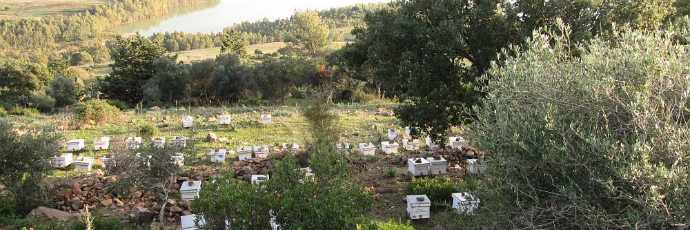
 Students of the Gastronomic Sciences at Pollenzo are collaborating with Slow Food to fill the Ark.
Territory
| State | Tunisia |
| Region | |
| Production area: | Cap Negro, Khorgalia, Dmaien, Ouled Salem, Rchadet Valleys |
