Alubia de Enkarterri
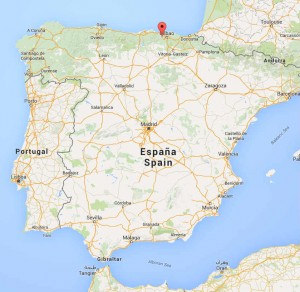
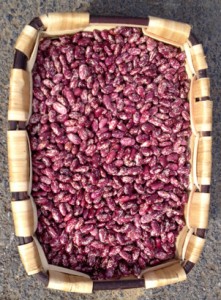
The legume Phaseolus vulgaris L. is known in the Iberian Peninsula by many different names. In Castilian it is called alubia (from the Arabic al-lubíia) and in Euskera or Basque, it is known as indaba (meaning “Indian bean”) and babarrun. The wild form of the alubia de Enkarterri is a common vine found in undisturbed places such as bushes on roadsides, edges of forests or fields in the district of Enkarterri (also known as Las Encartaciones) in northern Spain. It has also been cultivated on a small-scale for over 300 years in the Basque Country. Alubia de Enkarterri beans can be purple or cream colored, and often both appear in the same population. They are usually harvested from mid-May to mid-October. Like other legumes, symbiosis with Rhizobium bacteria allows the bean plants to be good fixers of nitrogen. Its nutritional properties are due mainly to its high protein content, and to a lesser extent its carbohydrate, vitamin and mineral content. A peculiar way of cooking beans was devised by the engineers of the railway line that links Bilbao y León, crossing Las Encartaciones its path. This curious dish was born of coal heat and steam, rocked by the rattle of the trip. In the days of steam engines, railway workers cooked their lunch in a pot placed above the steam boiler of the locomotive, and so slowly, the beans would cook along with meat and chorizo sausage. This way of cooking the beans became a tradition in every town through which the ‘Hullero’ train passed, but perhaps the most famous beans are those of Balmaseda, the regional capital of Las Encartaciones. Inspired by this original method, a separate cooking device including a ‘boiler’ was designed, a frame reinforced with metal rivets, and artisanally decorated. The container is mounted on three legs and features several holes to allow air to enter and steam to exit. Charcoal is placed in the bottom of the container and the pot is fitted above it. Pork products are also typically added to the cooking beans, including ribs, bacon, chorizo sausages and morcillas (blood sausages), are called sacramentos (‘sacraments’). The preparation of the beans in the “railway stew” does not differ much from those prepared in a normal kitchen, with the main difference is the control over the amount of heat depending on the quantity being made. The dried beans can be stored almost indefinitely in a cool, dry place, but their nutritional qualities decrease and the required cooking time lengthens over time. Alubia de Enkarterri can still be found in small quantities in local markets, but today there are only two active commercial producers.
Back to the archive >