


Katwijks Peentje
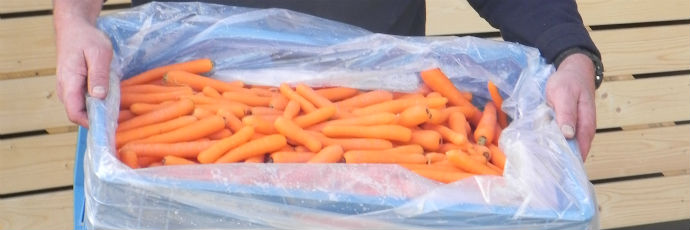
Katwijk carrots (Katwijks bospeentje) as they are called locally, are fine, slender carrots, tapering to a pointed tip. Only two or three farmers still grow this variety on the sandy soil behind the dunes in this coastal area of South Holland. The carrots are harvested by hand and well rinsed for storage and before eating. It is therefore not necessary to peel the carrot before consumption. It is a slender, crisp, brittle carrot, sweet in taste and a delicate orange-pink in colour, very different from the bright orange carrots that can be found in the supermarket. Its seed originates from the variety Amsterdam Bak. The specific combination of chalk and salt in the white sandy soil impart the Katwijk carrots with a better flavour than carrots grown in heavier soil. Furthermore, the carrots of these sandy soils have a more intense colour. Also still in existence is the Katwijk waspeen (the cleaned carrot without its green leaves). This version of the carrot is not stored in warehouses but remains in the soil, covered with straw, until February. In the 19th century a town, adjacent to Katwijk (Rijnsburg) also tried to grow the carrot. They washed the carrots in the water of the Vliet River and in doing so contaminated the carrots with typhus, sickening the entire region. Because of this, the washing of carrots became mechanized, which created a need for a tougher, harder variety of carrot that could withstand the force of the machines. Since then only the waspeen remained in widespread existance. Only one known producer still grows and hand harvests and cleans the Katwijk carrots, which are rarely sold directly to customers at the Amsterdam Food Plaza. Furthermore, much of the former growing area of this carrot variety has now switched to cultivating flower bulbs.
Back to the archive >De niet-machinaal gerooide Katwijkse peentjes worden vooral in België gewaardeerd. Het zaad is afkomstig van het ras Amsterdamse Bak. Ook de Katwijkse waspeen bestaat nog, deze wordt niet opgeslagen in pakhuizen, maar blijft met stro afgedekt in de volle grond tot februari.
Juist de combinatie van meer kalk en zout in de witte zandgrond zorgt ervoor dat de Katwijkse peentjes lekkerder smaken dan wortels die op zwaardere grond worden geteeld. Bovendien hebben peentjes van de geestgronden een intensere kleur, volgens de kenners. De Katwijkse peentjes waren bijna van de Nederlandse bodem verdwenen omdat de boeren achter de duinen de wortels inruilden voor de bollenteelt. Op het Amsterdam Food Plaza zijn het de firma's Mooij en Vroegop die de peentjes verkopen.
Diny Schouten zegt er in haar culinaire serie in Vrij Nederland en in haar boek Het spek van slager Blom het volgende over: “Het smaakverschil ligt behalve de grondsoort ook in het ras. Voor machinale bewerking heb je hardere peen nodig, daarom is bulkpeen (dus de supermarktpeen) een kruising met grovere winterpeen: die kun je desnoods bulldozeren – en zo gebeurt het dus ook; voor kant-en-klaar geschrapt en voor conserveren is zwaar gebutste grove peen al goed genoeg. Voerpeen eigenlijk, maar dat willen de Aanhanes niet gezegd hebben. De Aanhanes moeten nu veel moeite doen om hun eigen ‘ouderlijnen’ te bewaken, het zaad voor hun peentjes (‘Amsterdamse bak’) moet van eigen nakomelingen zijn, en daarvoor is geloof nodig in kleinschaligheid bij de zaadleveranciers.”
Oorzaak verdwijnen: Slechts geteeld door één kwekersfamilie.

