


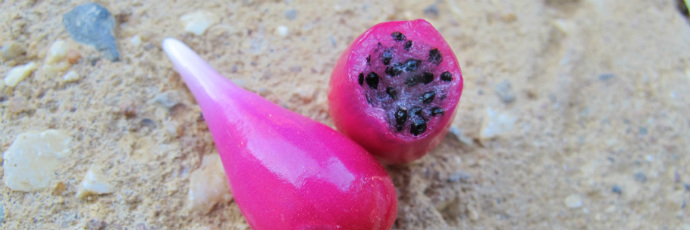
Parülua
Pichigüel, or parülua in the Wayuu language, is a small cactus that grows wild in sandy areas of tropical dry forests of Middle and Upper Guajira, in northern Colombia. It is highly prized by the Wayuu indigenous community of Colombia. Its fruit, which is small in size and red in color, is eaten fresh. Its pulp is bittersweet and juicy. The pulp of the cactus is also eaten when the the cactus is plump and a bright green color. After it has been peeled and the spines removed, the pulp is cooked and eaten on its own, often served as an accompaniment to meat. It can also be used to make tortillas by grating the pulp and mixing it with oil until it forms a dough. Salt is added and tortillas are formed and cooked over a griddle (called a sütana) until dry, then placed on a grill to continue cooking. Pichigüel is harvested during the season of juyapü (winter), from October to December. The fruit is picked by hand. Great care must be taken, and the fruit must be carefully inspected before eating. To remove the entire plant, a spade must be used, as the root is very long and tough. The fruit is rich in vitamin C and calcium, and it is also a good source of potassium, sodium and dietary fiber. The micronutrients in the fruit act as antioxidants. Eating the fruit is recommended for breast-feeding women, as it is believed to help milk production. Older people recommend not eating the fruit and being very careful if two holes can be seen in it, as this could signify that a snake has sucked out the juice and the fruit might have been poisoned and the snake is nearby. This cactus is believed to have magical powers to drive out evil forces from houses and the sick. In general, it is used by the ouutsü (traditional doctor) for spiritual cleansing. The cactus has a very distinctive, strong odor, which can mask the scent of humans, meaning they cannot be found by evil spirits. Pichigüel is a wild plant, the fruit of which, and occasionally the whole plant, is harvested when other foods are scarce. It is not sold commercially, but harvested for home consumption and for use in rituals. The plant is common in the area, but there is a breakdown of tradition and of the channels for passing on the legacy of knowledge to new generations, who have become disconnected from their traditions. The culinary use of pichigüel, along with its medicinal and magical uses, are at risk of being lost.
Back to the archive >

