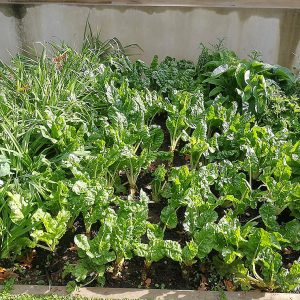
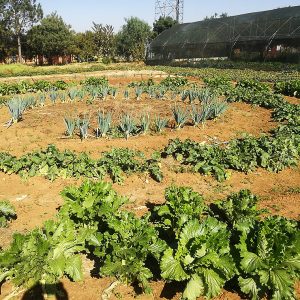
The Centre is part of the Afrika Tikkun organization to improve the lives of the most vulnerable. This particular building was the old Transvaal Memorial Children’s Hospital. It now serves as a community centre where many of the immigrants living in the inner city of Johannesburg send their children to attend the early childhood development, career development assistance for young adults, and a family support system. The Garden has provided not only much needed food sovereignty for this community but it also serves as a training centre for youth in particular on how to be food secure even when living in poverty conditions in a city.
Due to the size of this Garden there is much excess produce and this is sold to fund inner city projects aimed at uplifting the quality of lives of the most vulnerable.
Uthando School Garden
Back to the archive >Products
- Bell pepper
- Onion
- Tomato
- Lettuce
- Cabbage
- Eggplant
- Beetroot
- Peach
Slow Food in South Africa
In the “Rainbow Nation,” indigenous ethnic groups—the Zulu, Xhosa, Venda and Tsonga to name just a few—have over the centuries been joined by Portuguese, British and Dutch colonizers, then subsequently by waves of Asian immigration. South Africa has the highest number of people of Indian descent outside of India in the world. Hundreds of languages are spoken across the many diverse environments, from the temperate and Mediterranean-like West Cape to the arid Karoo and the subtropical northeast. But the country’s spectacular biodiversity is being destroyed by human activity. Agricultural biodiversity, for example, has been drastically reduced due to the widespread use of GMO seeds. Around 80% of the maize being cultivated is genetically modified. This type of agriculture is linked to the similarly industrialized production of foods high in sugar, salt, fat, additives and refined flour, creating eating habits that are leading to a rapid increase in heart disease and obesity. For these reasons, the Slow Food network in South Africa is working to highlight the relationship between food and health. Awareness is being raised among consumers about the importance of eating local, seasonal food, and the Slow Meat campaign is promoting more responsible meat consumption, with lower quantities, higher quality and the use of different cuts to avoid waste. It is not just consumers who are in need of better information. South Africa also has many small-scale farming families with little basic knowledge who urgently need technical training in order to help them develop sustainable agriculture practices. The 10,000 Gardens in Africa project is therefore of particular importance to the country’s development and the health of its people.
Garden Informations
| Type: | School Garden |
| Surface in m2: | 1800 |
| People involved: | 540 |
| Coordinator: | Tim Abaa |
| Sibling with: | Costa Crociere, Italy |