Slow Food
  • Donate
  • Join us
  • Italian
  • English
Slow Food Foundation

Search

  • Home
  • About us
    • What is the Foundation?
  • What We Do
    • Slow Food Gardens in Africa
    • Slow Food Presidia
    • Ark of Taste
    • Slow Food Cooks’ Alliance
    • Earth Markets
    • What is the Narrative Label?
  • Get involved
    • Why Support Us
    • Italian Slow Food Presidia Sponsors
  • Multimedia
    • Publications
    • Video
    • Gallery
    • News archive
    • Photo archive
  • Contacts
Slow Food Foundation Slow Food Foundation
  • Home
  • About us
    • What is the Foundation?
  • What We Do
    • Slow Food Gardens in Africa
    • Slow Food Presidia
    • Ark of Taste
    • Slow Food Cooks’ Alliance
    • Earth Markets
    • What is the Narrative Label?
  • Get involved
    • Why Support Us
    • Italian Slow Food Presidia Sponsors
  • Multimedia
    • Publications
    • Video
    • Gallery
    • News archive
    • Photo archive
  • Contacts

Search

Home » 10.000 Orti in Africa » Gomparou School Garden

Gomparou School Garden

Back to the archive >

Benin

Alibori

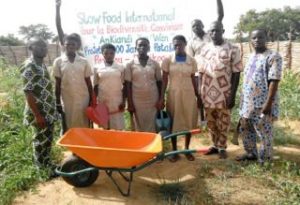
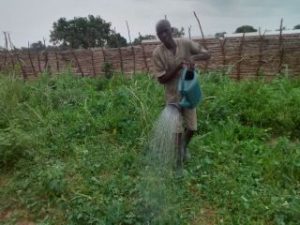
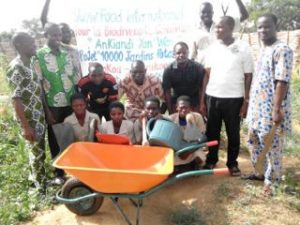
The “CEG Gomparou organic garden” is a school garden created in 2013 at the General Teaching College of Gomparou. It is basically managed by the students overseen by three teachers and with the support of the parent-student office council.
The college is in the Gomparou district in the Banikoara township, in the Tokobani quarter. There are 1,532 students, going from 6th to Terminale.
The production site covers about 0.5 ha. Teaching is ensured by two Science of Life and Earth (SVT) teachers and supported by the general college oversight.
Activities are limited during the school year to off-season production, which is enjoyed by and beneficial to everyone. During the rainy season, the production site is limited to maintenance.
The first contact with the Slow Food International group was in 2014 via the AVD Benin, and the Slow Food convivium “Ankiandi Yan’Wan”.
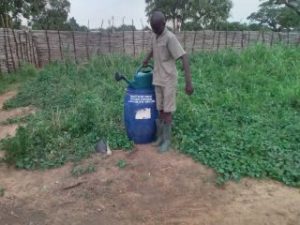
The garden serves as an experimental site for teaching, where the students learn in class about vegetable growing in the context of environmental protection. It essentially involves growing fruits and vegetables without using chemical products (pesticides). This leads to making organic fertiliser for organic use.
The garden produces ordinary vegetables like tomatoes, lettuce, okra, beans and cabbage, among others.
Half of the produce is distributed freely to the children and staff who are permanently active in the garden, as a food supply for their families, and the other half is sold to locals. Revenues from sales are used to purchase tools for the garden.

Area
Tokobani quarter, Banikoara township, Gomparaou district

Coordinator
Gbena Frejusto Do Capio-Vianio Kougblenou
Products

  • Tomato
  • Lettuce
  • Okra
  • Cabbage
  • Bean

Slow Food in Benin

The West African country of Benin is home to around 40 different ethnic groups with very strong traditions. The national economy is based on agriculture—mostly extensive—in which 70% of the active population is engaged. The safeguarding of biodiversity and access to land (problematic due to the lack of ownership rights and land grabbing) are the main challenges facing the Slow Food network in Benin. Slow Food began to gain a foothold in the country in 2004, after the first Terra Madre gathering in Turin. The network has evolved around the school and community food gardens scattered across the country, and has organized exchanges between the convivia, visits, shared planning meetings and the development of a coordinated strategy. The network is now working at a national level to map and promote forgotten varieties of leafy vegetable. In the northern area of Natitingou, known for the cultivation of cotton, tobacco and manioc and the production of gari (manioc flour), the Slow Food convivia have been working since 2015 to create agroecological gardens, seeking out and reproducing forgotten native seeds and cultivating local varieties of taro, white maize, millet, fonio and tiger nut sedge. In other convivia in the south of the country, young farmers have started to organize educational activities for children and training sessions on agroecology and to forge partnerships with local restaurants to develop short supply chains and promote local foods and dishes.

Garden Informations

Type:School Garden
Surface in m2:1500
Slow Food Convivium:Ankiandi Yan’Wan Convivium, Parakou
Coordinator:Gbena Frejusto Do Capio-Vianio Kougblenou
Sibling with:Banco di credito P. Azzoaglio S.p.a., Italy

Photos

Subscribe to the newsletter

Slow Food gratefully acknowledges funding support from European Union. The contents of this website are the sole responsibility of Slow Food and the CINEA is not responsible for any use that may be made of the information contained therein.
Slow Food - P.IVA 02743970044 - Privacy Policy - Cookie Policy - All rights reserved
Powered by Blulab