Slow Food
  • Donate
  • Join us
  • Italian
  • English
Slow Food Foundation

Search

  • Home
  • About us
    • What is the Foundation?
  • What We Do
    • Slow Food Gardens in Africa
    • Slow Food Presidia
    • Ark of Taste
    • Slow Food Cooks’ Alliance
    • Earth Markets
    • What is the Narrative Label?
  • Get involved
    • Why Support Us
    • Italian Slow Food Presidia Sponsors
  • Multimedia
    • Publications
    • Video
    • Gallery
    • News archive
    • Photo archive
  • Contacts
Slow Food Foundation Slow Food Foundation
  • Home
  • About us
    • What is the Foundation?
  • What We Do
    • Slow Food Gardens in Africa
    • Slow Food Presidia
    • Ark of Taste
    • Slow Food Cooks’ Alliance
    • Earth Markets
    • What is the Narrative Label?
  • Get involved
    • Why Support Us
    • Italian Slow Food Presidia Sponsors
  • Multimedia
    • Publications
    • Video
    • Gallery
    • News archive
    • Photo archive
  • Contacts

Search

Home » 10.000 Orti in Africa » Isman Salah School Garden

Isman Salah School Garden

Back to the archive >

Somalia

Shabeellaha Hoose

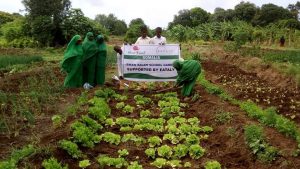
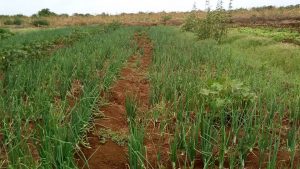
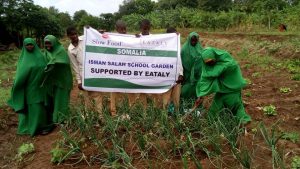
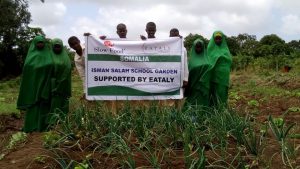
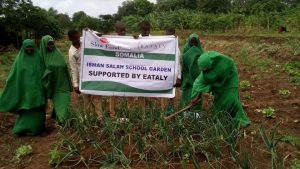
The garden is located in the village of Ismaan Salah, in particular at its school. It is a medium size garden that measures 8 jibaals (1 jibaal, a local measure, is a half-acre): it is cultivated by school students and teachers. The garden was established in 2015 after the village got the chance to have a school. Its villagers are all farmers and their children didn’t have the chance to study before. Once the villagers became aware of the importance of education and sending children to school, the elders, community members, local authorities, parents and well respected people in the region agreed to open schools in Ismaan Salah. The garden produce is mainly used for family consumption. Some of it is sold and the resulting income supports the families of Ismaan Salah. Competitions for students are organized and part of the harvest is given as a reward for students who get good marks in the school year exams. The people involved in this garden are 42, including girls, boys and teachers who actively work in the garden. They take care of various activities, including planting, weeding, irrigating and controlling the destination of the produce. The fertility of the soil is kept thanks to cultural practices such as crop rotation, adding manure and ploughing the weed in the farm, which is then used to improve the humus of the soil. During the school holidays, some gardeners continue to work in the garden in order to improve its production. In these periods, the harvest is sold to earn a little income to rehabilitate and develop the school.

Area
Isman Salah Village

Coordinator
Merka Convivium leader
Slow Food in Somalia

Somalia has been subject to one of the worst crises of any country. Long years of anarchy, civil war, tribal conflicts, fundamentalism, banditry and natural disasters have devastated the country, and this prolonged conflict and instability has damaged agricultural productivity. Many farmers have either lost their assets (livestock and irrigation equipment) or been displaced from their land. The production of bananas and other fruits, once Somalia's second largest export after livestock, has been hindered by the civil war and intermittent armed clashes over control of this lucrative export business. Local people, meanwhile, must often depend on international food aid for their survival. Slow Food has existed in Somalia since 2011. Today it has a strong network that promotes sustainable food production, protects food biodiversity by saving many products from extinction through the Ark of Taste project and connects key figures in the country’s food world. Despite the difficult conditions and the political situation since the 1990s, Slow Food has still managed to create a remarkable number of community and school food gardens, planted with crops like lettuce, carrots, tomatoes, white and red onions, sweet and hot peppers, pumpkins, spinach, sesame and maize. The message that Slow Food Somalia wants to send to the world is that we can work together to end this cycle of humanitarian crises by developing the agricultural sector into one that is highly productive, profitable and sustainable.

Garden Informations

Type:School Garden
People involved:44
Slow Food Convivium:Merka Convivium
Sibling with:Eataly, Italy

Photos

Subscribe to the newsletter

Slow Food gratefully acknowledges funding support from European Union. The contents of this website are the sole responsibility of Slow Food and the CINEA is not responsible for any use that may be made of the information contained therein.
Slow Food - P.IVA 02743970044 - Privacy Policy - Cookie Policy - All rights reserved
Powered by Blulab