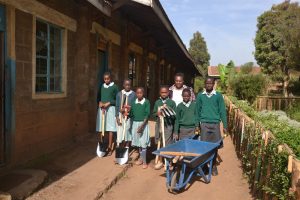
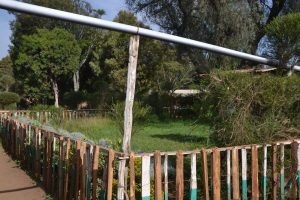
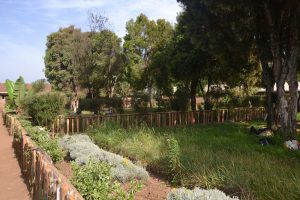
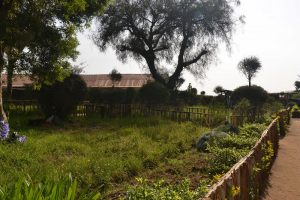
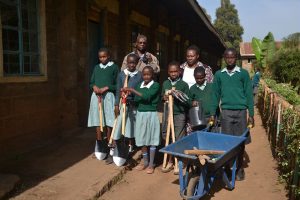
The school is located in Molo location, Molo sub-county, Nakuru county. It has a total population of 1,400 pupils (780 girls and 620 boys). The garden covers an area of about ¼ an acre and is located behind one block of classrooms in the northern part of the school. The garden involves 25 pupils (10 girls and 15 boys), who formed the 4K Club after being introduced to Slow Food’s 10,000 Gardens in Africa project. The four k’s of the 4K Club stand for: Kuungana (unite), Kufanya (act together), Kusaida (help), Kenya. Through the club the students do practical activities in the garden, learn the importance of making a conscious choice about quality food and learn to respect biodiversity. The activities show the students the sustainability of organic agriculture and help them develop organizational and leadership skills. After agriculture was slashed from the syllabus in primary schools, the club disappeared from the school but its revival is aimed at ensuring that students are able to learn basic skills in agriculture. Despite the fact the only 25 students are involved in the club, other students also benefit from the garden, as most of the practical science lessons are organized in the garden. Due to a water shortage the garden is currently covered with onions but plans are in place to introduce more crops like kale, spinach, coriander, carrots and amaranth. The students have been trained on different methods of water conservation and water use efficiency. The garden is very fertile but to supplement fertility, students bring manure from their homes and have also started composting. Plant extracts are used in the fight against pest and diseases. Some of the plants used in the preparation of these remedies include aloe vera, stinging nettle, Mexican marigold, chilis and pyrethrum. The harvests are sold to the teachers and the money used to finance the gardening activities.
Area
Molo Location, Molo sub-county, Nakuru county
Coordinator
Abraham Maangi